Traditional fabrics are textiles tied to a place and a people, made with methods passed down for generations: strip weaving in West Africa, wax resist in Java, tie-dye in India, reverse appliqué in Panama, felt in Kyrgyzstan and handweaving in the Scottish islands. Here are 42 of them with photos, how each is made, and how to sew and care for it.
Find a fabric fast
Showing 42 fabrics
African fabrics
From hand-loomed strips to bold factory prints, African textiles carry names, proverbs and family history.
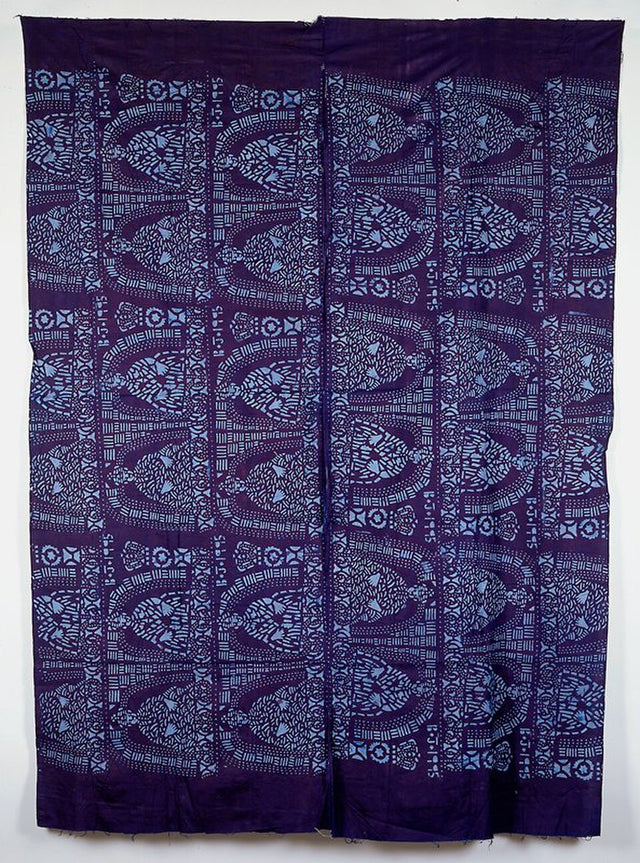
Adire
Indigo-dyed cotton of the Yoruba people, patterned by tying, stitching or painting cassava starch on the cloth before dyeing. Abeokuta and Osogbo are famous centers.
Origin
Nigeria
Technique
Resist dyeing: tied, stitched or starch-painted
Fiber
Cotton
Best for
Wrappers, dresses, shirts, headwraps, quilts
Tip: Indigo can rub off on light fabrics, so wash adire separately the first few times.
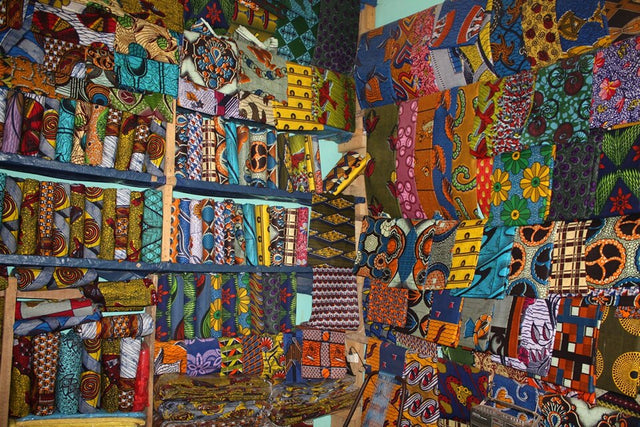
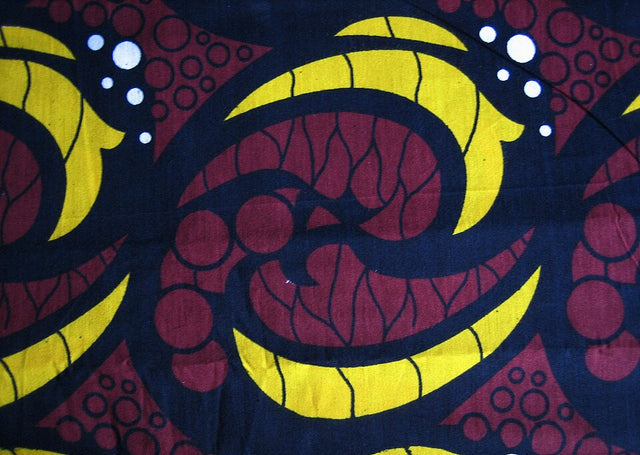
Bright cotton prints made with a wax-resist method adapted from Javanese batik. Dutch and British mills industrialized it in the 1800s, and West and Central Africa made it their own.
Origin
West and Central Africa
Technique
Resin wax-resist printing on both sides
Fiber
Cotton
Best for
Dresses, skirts, shirts, headwraps, quilts
Tip: Real wax prints show the design on both sides and feel stiff at first. A cold prewash softens them. Many are sold in 6-yard pieces.
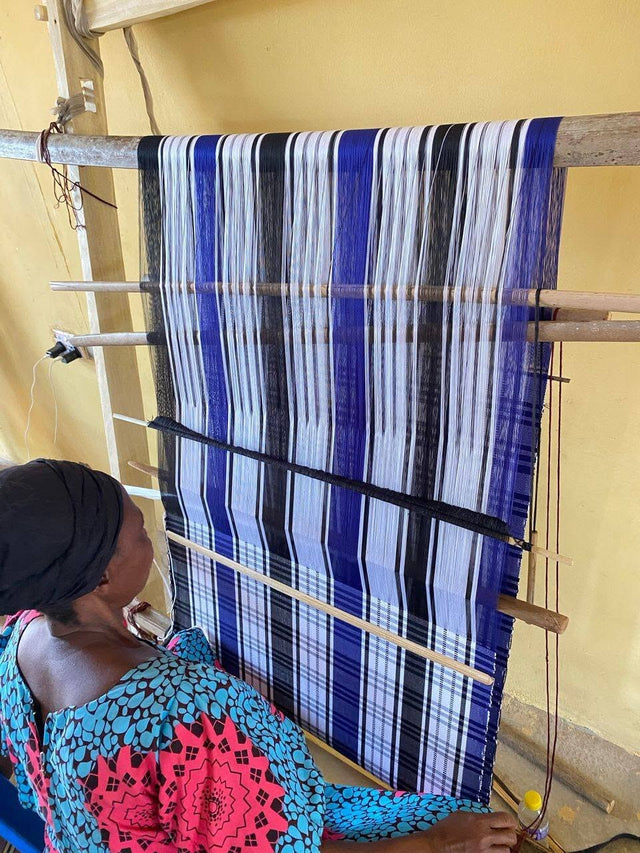
Prestige cloth of the Yoruba, handwoven in narrow strips and sewn into wide panels. The classic types are etu (dark indigo), sanyan (beige wild silk) and alaari (red).
Origin
Nigeria
Technique
Strip weaving on narrow looms
Fiber
Cotton, silk, metallic yarn
Best for
Gele head ties, wrappers, agbada, ceremonial outfits
Tip: It is thick and stiff, so choose structured designs, use a 90/14 or 100/16 needle and bind the cut edges.
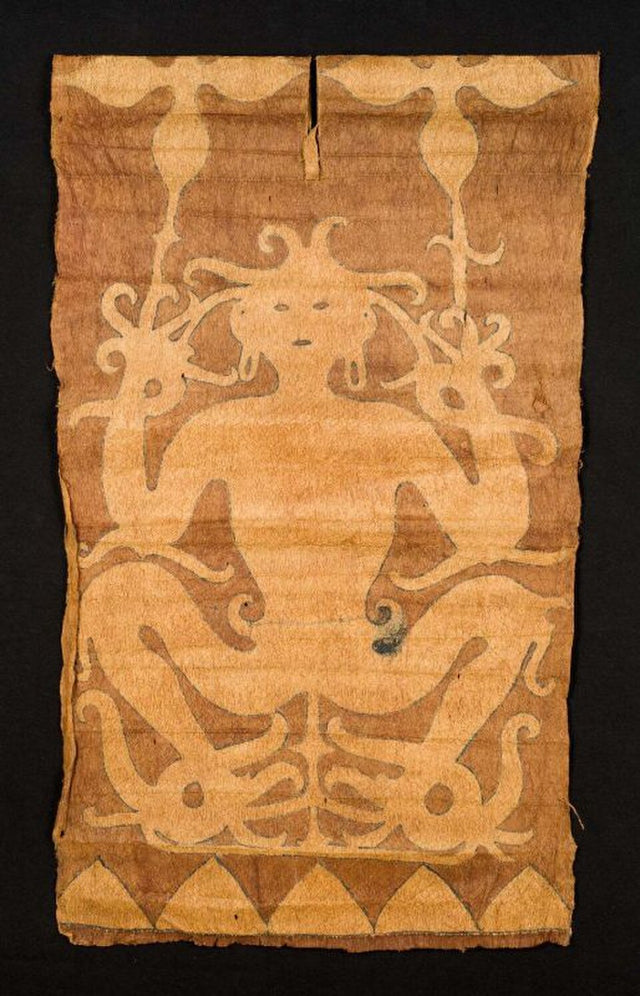
Cloth made by soaking and beating the inner bark of trees into a soft sheet, one of the oldest ways to make fabric. Ugandan barkcloth, beaten from the mutuba fig tree, is on UNESCO's intangible heritage list.
Origin
Uganda, Indonesia and the Pacific
Technique
Beaten bark, not woven
Fiber
Inner tree bark
Best for
Wall art, bags, book covers, lampshades
Tip: It doesn't fray but it can tear. Sew with long stitches and a sharp needle, and spot clean only.
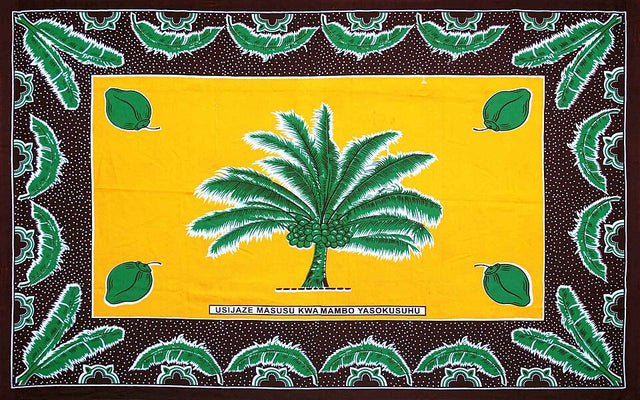
A light cotton rectangle with a printed border, a central motif and a Swahili saying, sold in matching pairs. People read the saying before they wear or give a kanga.
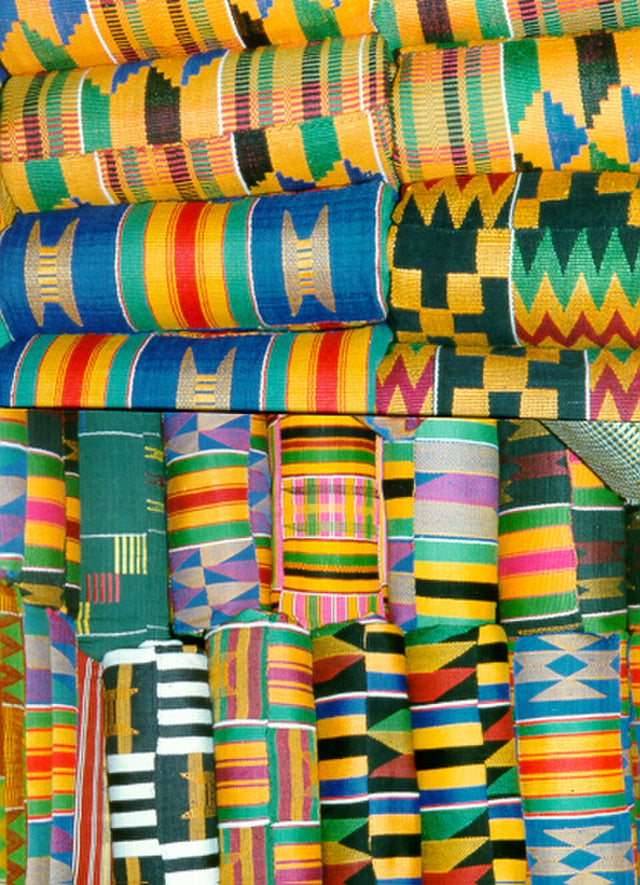
A handwoven cloth of Ghana's Asante and Ewe peoples, made of narrow strips about 4 inches wide sewn edge to edge. Each pattern and color has a name and meaning, and it was once reserved for royalty.
A colorful printed cotton worn across East and Central Africa, heavier than kanga and often with a border along one edge. It is sewn into dresses and shirts or worn as a wrap.
Origin
Kenya, Tanzania, Uganda, Zambia, DR Congo
Technique
Roller or wax-resist printing
Fiber
Cotton
Best for
Dresses, shirts, wraps, baby carriers, bags
Tip: Prewash to remove sizing, and plan where the border falls, for example on a hem or a cuff.
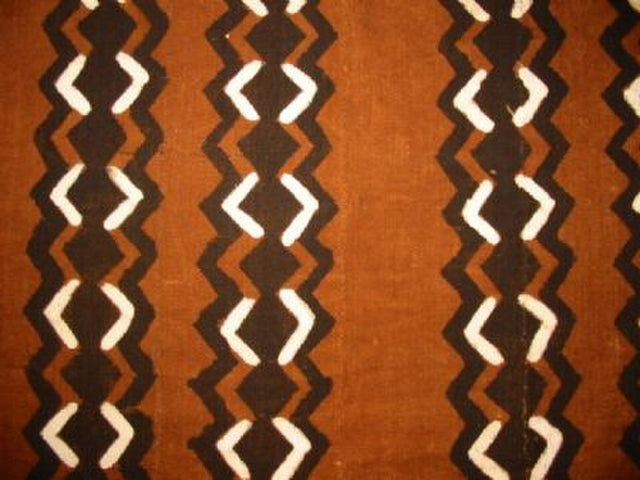
Handwoven cotton from Mali, dyed with leaf tea and painted with fermented, iron-rich river mud that turns the pattern dark. Its symbols tell stories and mark life events.
Origin
Mali (Bamana people)
Technique
Strip weaving, leaf dye and mud painting
Fiber
Cotton
Best for
Pillows, throws, jackets, bags, wall hangings
Tip: Hand wash in cold water with mild soap and expect some color loss. Use a 100/16 needle to sew over the thick strip seams.
Photo: Malidirect, public domain, via Wikimedia Commons
Shweshwe
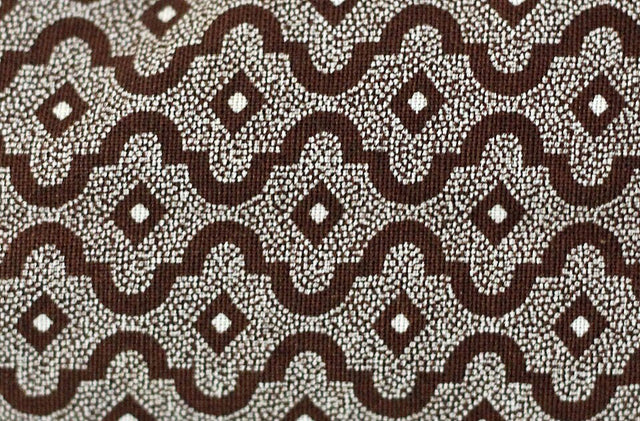
A South African printed cotton with tiny geometric designs, made by discharge printing: a weak acid bleaches the pattern out of dyed cloth. Classic colors are indigo, brown and red.
Origin
South Africa
Technique
Discharge roller printing
Fiber
Cotton
Best for
Dresses, skirts, aprons, quilts
Tip: New shweshwe is stiff with starch that washes out. Prewash before cutting, because it softens and shrinks a little.
India, Pakistan and Bangladesh share some of the world's richest hand-textile traditions, from handspun khadi to gold-woven Banarasi silk.
Ajrak
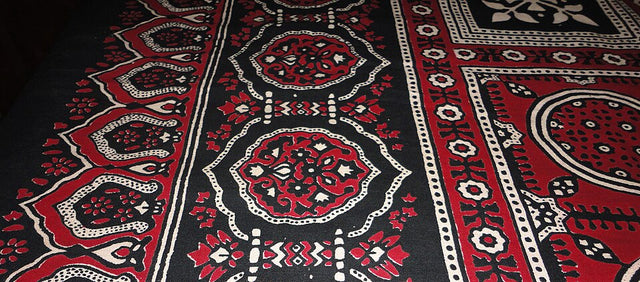
Block-printed cotton from Sindh and Kutch with symmetrical geometric patterns in indigo and madder red. It takes many rounds of printing, dyeing and washing, sometimes over weeks.
Origin
Sindh, Pakistan, and Kutch, India
Technique
Resist and mordant block printing
Fiber
Cotton
Best for
Shawls, scarves, shirts, quilts, bedspreads
Tip: Natural dyes fade in the sun. Wash cold with mild soap and dry in the shade.
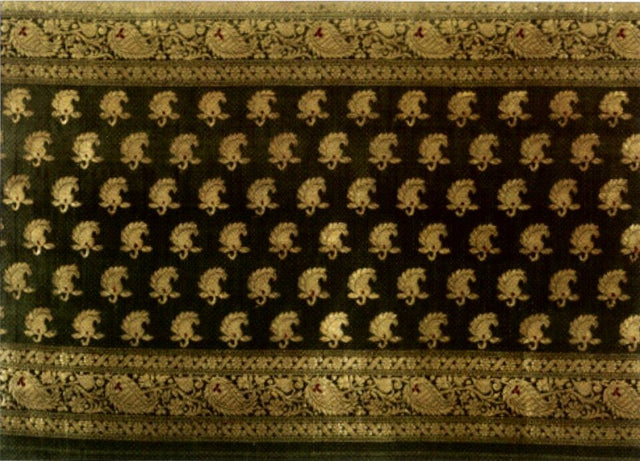
Silk brocade from Varanasi, woven with zari, threads wrapped in gold or silver, in floral and paisley motifs. Banarasi saris are a favorite for weddings.
Origin
Varanasi, India
Technique
Brocade with zari supplementary weft
Fiber
Silk, zari metallic thread
Best for
Wedding saris, lehengas, jackets, cushions
Tip: Zari scratches and snags, so fully line garments and press from the back over a towel.
Photo: Unknown author, public domain, via Wikimedia Commons
Bandhani
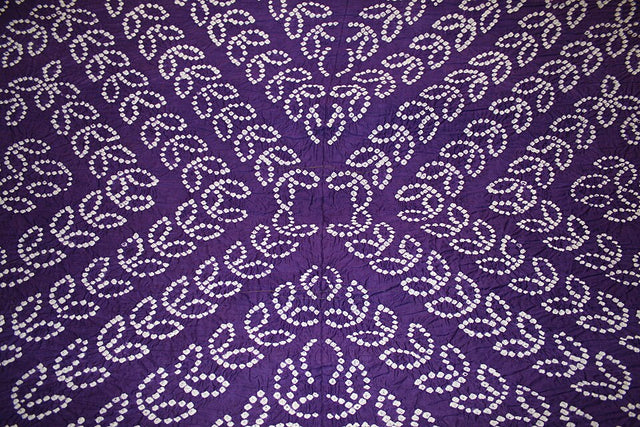
Tie-dye in which thousands of tiny points of cloth are pinched and bound with thread before dyeing, leaving patterns of small dots. Leheriya, with its wave stripes, is a related technique from Rajasthan.
Origin
Gujarat and Rajasthan, India
Technique
Tie-dye
Fiber
Silk, cotton, georgette
Best for
Dupattas, saris, turbans, dresses
Tip: Dyes can bleed, so wash it separately in cold water. Leave some crinkle in for texture.
Photo: Mandayamr, public domain, via Wikimedia Commons
Jamdani
Fine cotton muslin with motifs woven in by hand, thread by thread, on the loom. The craft from the Dhaka region is on UNESCO's intangible heritage list.
Origin
Bangladesh
Technique
Supplementary weft, inlaid by hand
Fiber
Cotton
Best for
Saris, scarves, kurtas, dupattas
Tip: The motifs are woven in, so never cut through one. Hand wash gently or dry clean.
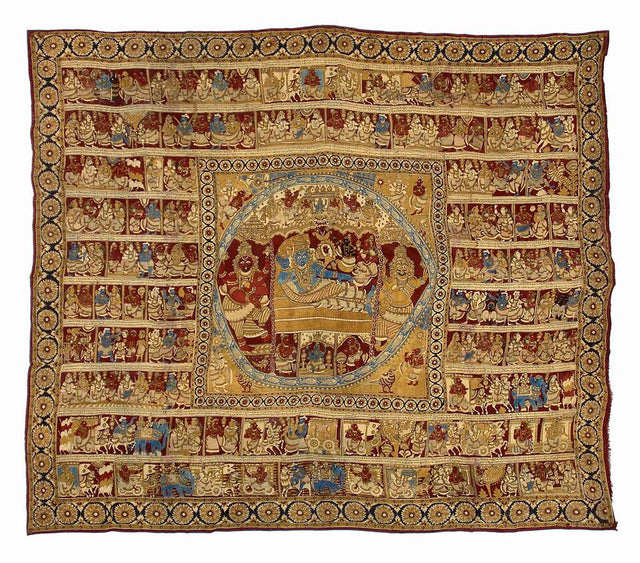
Cotton hand-painted with a bamboo pen, called a kalam, or block printed, using natural dyes. Scenes from Indian epics and flowering trees are classic designs.
Origin
Andhra Pradesh, India
Technique
Hand painting and block printing
Fiber
Cotton
Best for
Saris, kurtas, wall hangings, cushions
Tip: Wash separately in cold water and dry in the shade to keep the plant dyes bright.
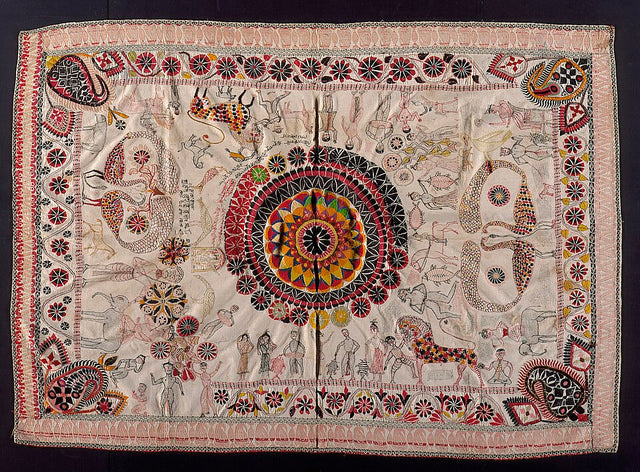
Layers of soft, worn saris stitched together with rows of running stitches, made into quilts, throws and bags. Nakshi kantha adds embroidered pictures and motifs.
Origin
West Bengal, India, and Bangladesh
Technique
Running-stitch quilting and embroidery
Fiber
Cotton
Best for
Quilts, throws, jackets, bags
Tip: Kantha is reversible. Wash gently in cold water and dry flat so the stitches don't pull.
Photo: LACMA, public domain, via Wikimedia Commons
Khadi
Fabric that is hand-spun and handwoven, usually from cotton. Mahatma Gandhi promoted it in the 1920s as a symbol of India's self-reliance, and it is still made in villages across India.
Origin
India
Technique
Hand spinning and hand weaving
Fiber
Cotton, also silk and wool
Best for
Kurtas, shirts, summer dresses, scarves
Tip: Handspun yarn shrinks more than mill yarn. Prewash twice before cutting.
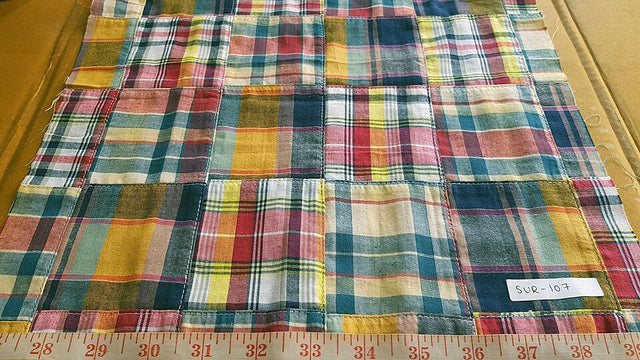
A lightweight cotton with a yarn-dyed plaid, named after the city now called Chennai. Classic bleeding madras used dyes that run and soften the colors with every wash.
Origin
Chennai, India
Technique
Yarn-dyed plain weave
Fiber
Cotton
Best for
Summer shirts, shorts, dresses, patchwork
Tip: Wash bleeding madras alone in cold water, and match the plaid at the center front.
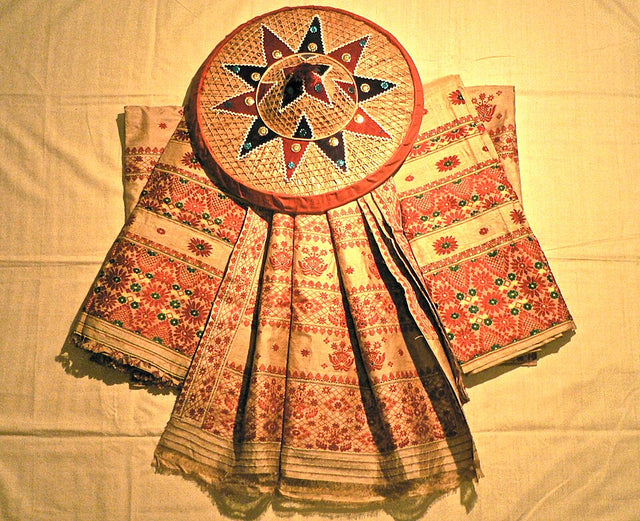
A rare golden silk produced only in Assam by a silkworm that feeds on aromatic leaves. It is very durable, and its natural sheen grows brighter with age.
Origin
Assam, India
Technique
Wild silk, handwoven
Fiber
Muga silk
Best for
Mekhela chador, saris, stoles
Tip: Muga's gold color is natural, not dyed. Hand wash in cold water with mild soap.
Very fine cashmere wool from Himalayan Changthangi goats, hand-spun and handwoven in Kashmir into light, warm shawls. Many cheap shawls labeled pashmina are blends or acrylic.
Origin
Kashmir and Ladakh
Technique
Hand spinning and hand weaving
Fiber
Cashmere wool
Best for
Shawls, stoles, scarves
Tip: Hand wash cold with wool soap, dry flat and store with cedar to keep moths away.
Wild silk from silkworms that live on forest trees, with a natural golden color and a rougher, textured feel. It is made across eastern and central India.
Origin
Eastern and central India
Technique
Wild silk, handwoven
Fiber
Tussar silk
Best for
Saris, jackets, kurtas, scarves
Tip: Tussar can shrink. Dry clean, or hand wash cold and press on medium heat.
Wax, tied yarns, folded cloth and beaten bark: techniques from Indonesia and Japan to the Pacific Islands.
Batik
Cloth patterned by drawing hot wax with a canting pen or stamping it with a copper block, then dyeing, often in many rounds. Indonesian batik is on UNESCO's intangible heritage list.
Origin
Indonesia (Java), also Malaysia
Technique
Wax-resist dyeing
Fiber
Cotton, silk
Best for
Shirts, dresses, sarongs, quilts
Tip: Batik's tight weave barely frays, which makes it great for appliqué. Hand-drawn batik shows the design on both sides.
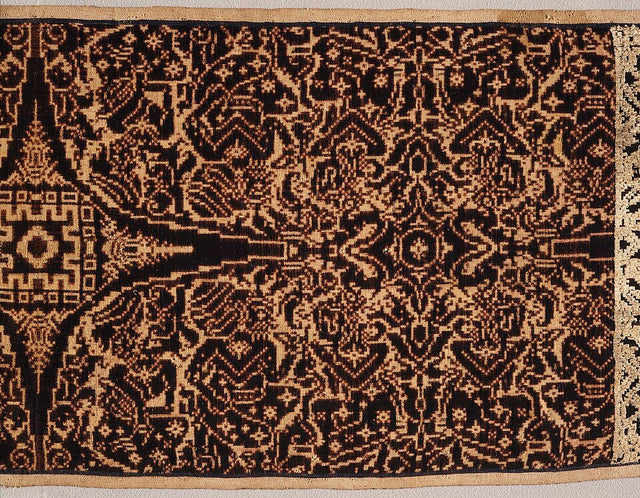
Yarns are tied and dyed before weaving, so the pattern appears with soft, feathered edges. In double ikat, like the Balinese geringsing shown here, both warp and weft are dyed, which is extremely rare.
Origin
Indonesia, India, Central Asia, Japan
Technique
Yarn resist dyeing before weaving
Fiber
Cotton, silk
Best for
Jackets, dresses, cushions, upholstery
Tip: The motifs are woven in, so plan their placement and buy extra to match them at seams.
Photo: LACMA, public domain, via Wikimedia Commons
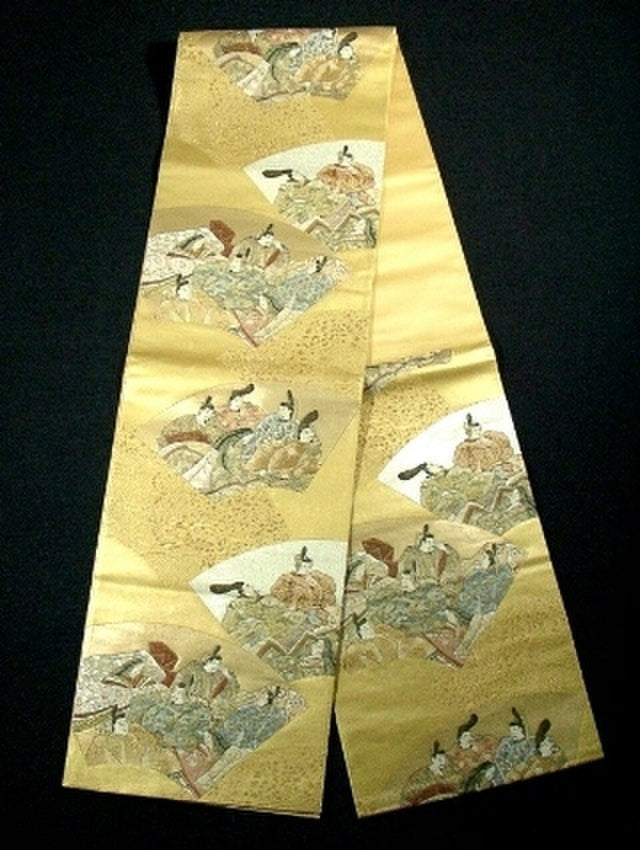
Nishijin-ori
Richly figured silk woven in Kyoto's Nishijin district for more than a thousand years, often with gold and silver threads. It is used for obi sashes and formal kimono.
Origin
Kyoto, Japan
Technique
Figured silk weaving
Fiber
Silk, metallic threads
Best for
Obi, kimono, bags, pillow fronts
Tip: Use small pieces as accents on bags or pillows, backed with a light fusible interfacing.
A sheer, crisp cloth handwoven from pineapple leaf fibers, often blended with silk and finely embroidered. It is the traditional fabric of the Filipino barong tagalog.
Origin
Philippines
Technique
Hand-scraped leaf fiber, handwoven
Fiber
Pineapple leaf fiber, silk
Best for
Barong tagalog, formal blouses, veils, gowns
Tip: Use a 60/8 needle and French seams. Hand wash in cool water and roll in a towel instead of wringing.
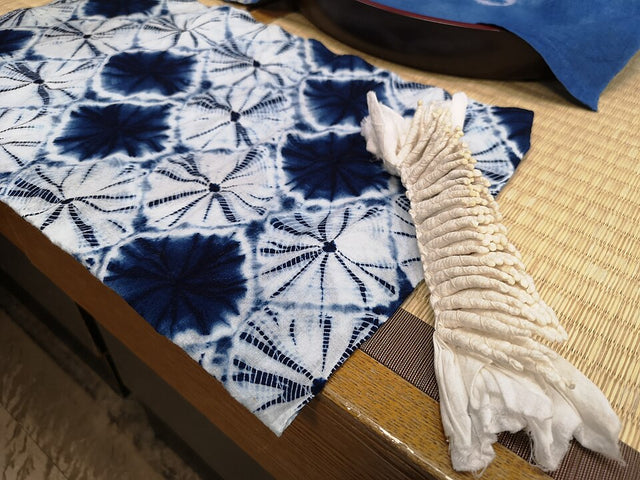
Japanese shaped-resist dyeing: cloth is bound, stitched, folded, twisted or clamped before it goes into the dye, usually indigo. Arimatsu, near Nagoya, is famous for it.
Origin
Japan
Technique
Shaped resist dyeing
Fiber
Cotton, silk
Best for
Scarves, tops, cushions, quilts
Tip: Press lightly, or not at all, to keep the crinkled texture.
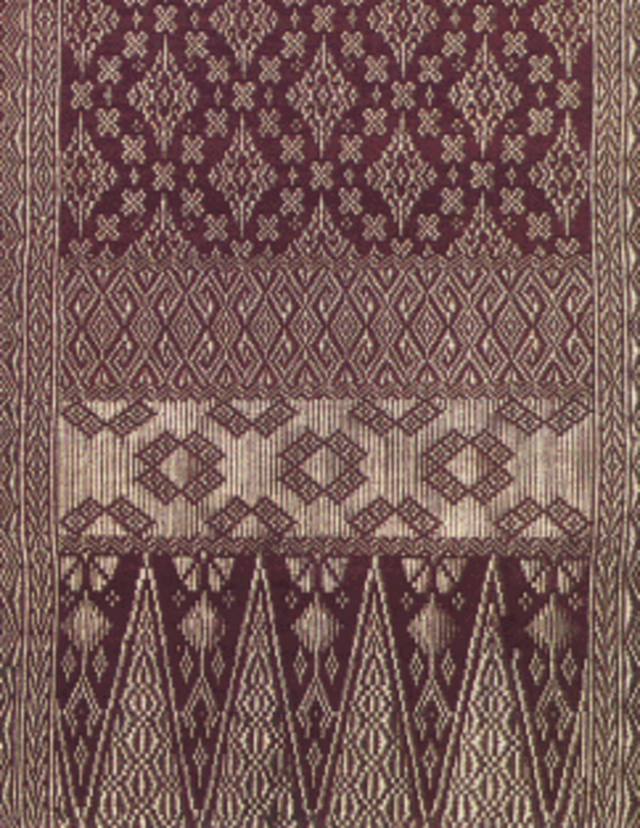
A handwoven brocade in which gold or silver threads float over a silk or cotton ground. It is worn at weddings and ceremonies in Malaysia, Indonesia and Brunei.
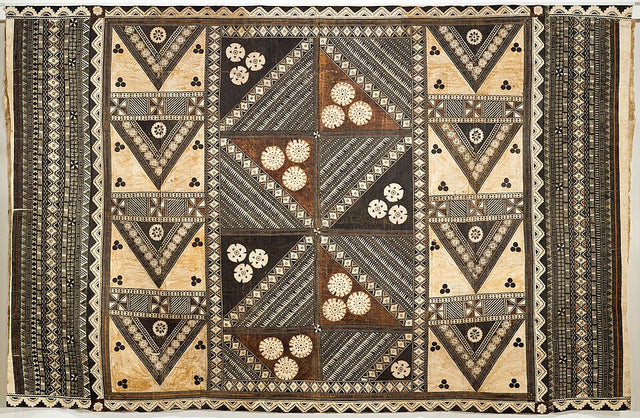
Bark cloth of the Pacific Islands, beaten from paper mulberry bark, joined into large sheets and decorated with stencils, rubbings and natural dyes. It is called ngatu in Tonga, masi in Fiji, siapo in Samoa and kapa in Hawaii.
Origin
Tonga, Fiji, Samoa, Hawaii
Technique
Beaten bark, not woven
Fiber
Paper mulberry bark
Best for
Ceremonial gifts, wall hangings, decor
Tip: Treat tapa as art and hang it away from damp and sun. For sewing, use tapa-print cotton.
Photo: LACMA, public domain, via Wikimedia Commons
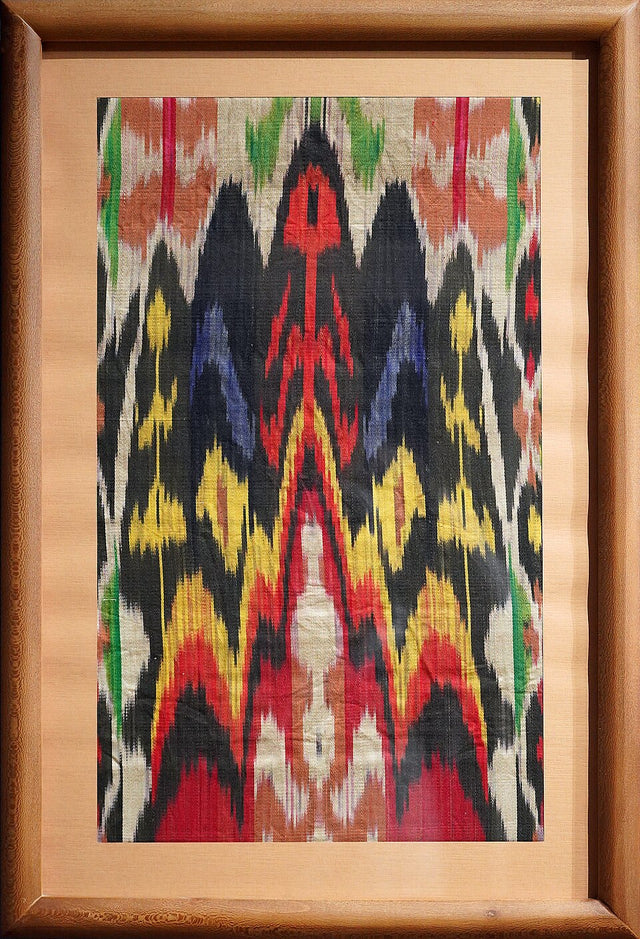
Bright ikat silks from the Fergana Valley in Uzbekistan, with bold, blurred motifs. Atlas is all silk in a lustrous satin weave; adras has a silk warp and a cotton weft and is a little heavier.
Origin
Fergana Valley, Uzbekistan
Technique
Warp ikat, hand-tied and dyed
Fiber
Silk; silk and cotton
Best for
Robes, jackets, dresses, cushions
Tip: The motifs are woven in, so buy extra to match them at seams. Dry clean atlas or hand wash it cold, because the colors can bleed.
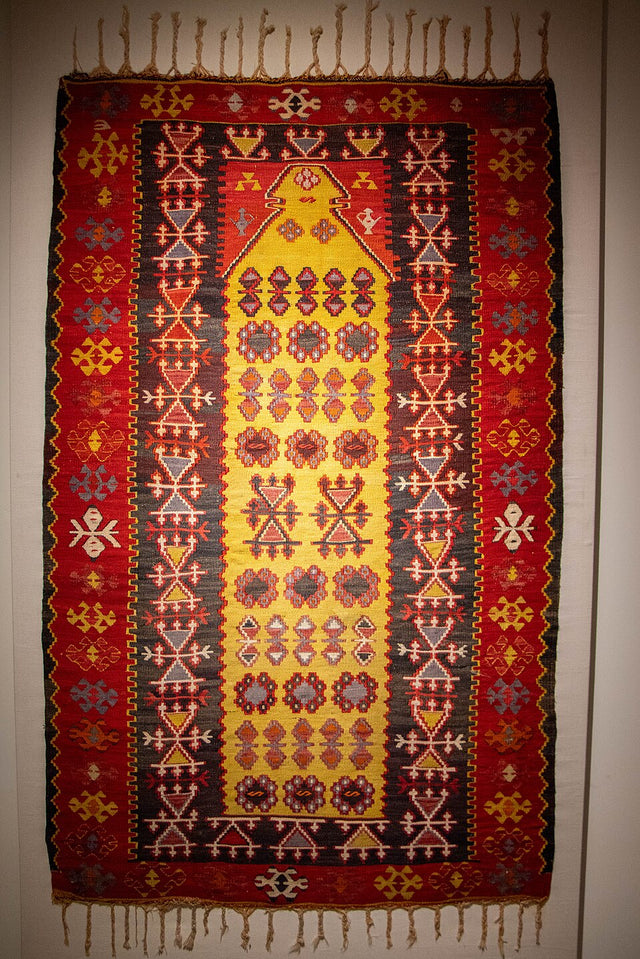
A flat-woven rug or textile with no pile, made in Turkey, Iran, the Caucasus, Central Asia and the Balkans. The pattern is woven in tapestry weave, often leaving small slits where two colors meet.
Origin
Turkey, Iran, the Caucasus, Central Asia, the Balkans
Technique
Slit tapestry weave
Fiber
Wool on a wool or cotton warp
Best for
Rugs, cushions, bags, upholstery
Tip: Kilim fabric is heavy: use a 100/16 or leather needle, and bind or zigzag the edges so the weft can't slip out.
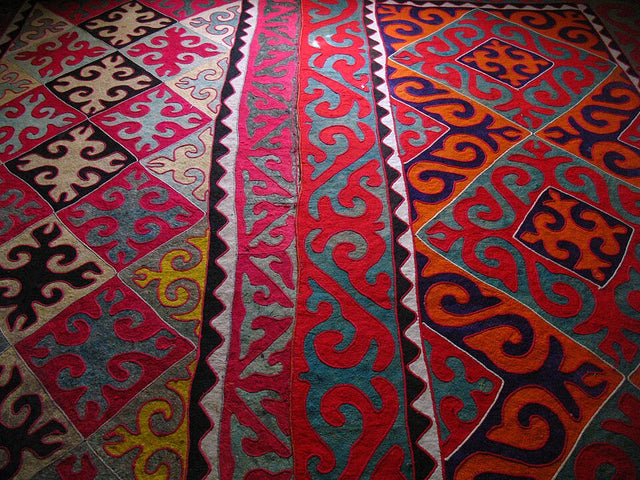
Felt rugs from Kyrgyzstan made from two contrasting colors of felt cut in the same pattern, swapped and stitched together edge to edge. Ram's horn and plant motifs are typical, and UNESCO lists the craft as needing urgent safeguarding.
Origin
Kyrgyzstan
Technique
Inlaid felt, hand stitched
Fiber
Sheep wool
Best for
Rugs, wall hangings, cushions
Tip: Felt does not fray, so the same cut-and-swap method works for appliqué. Shake and spot clean felt rugs instead of washing them.
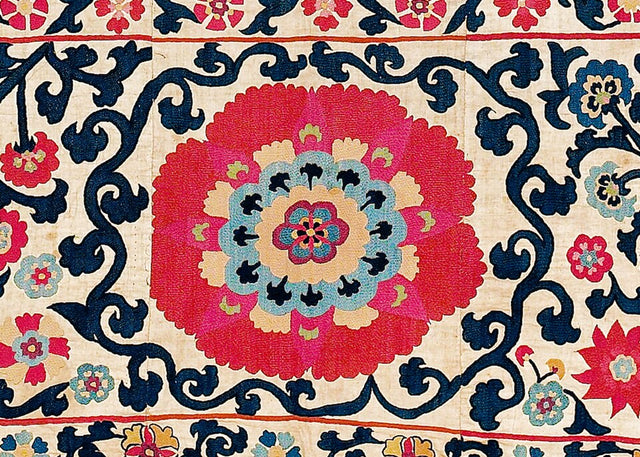
Large embroidered panels from Uzbekistan and Tajikistan, covered in sun, moon and flower medallions in chain stitch and couching. Traditionally a bride and the women of her family stitched them for her dowry.
Origin
Uzbekistan and Tajikistan
Technique
Hand embroidery on joined strips
Fiber
Cotton or silk ground, silk thread
Best for
Wall hangings, bedcovers, cushions, upholstery
Tip: Many suzanis were embroidered in separate strips and joined later, so motifs may not line up. Use them whole, or choose printed suzani cotton for cutting.
Island tweeds, clan tartans and French scenic prints that still shape fashion and decor.
Harris Tweed
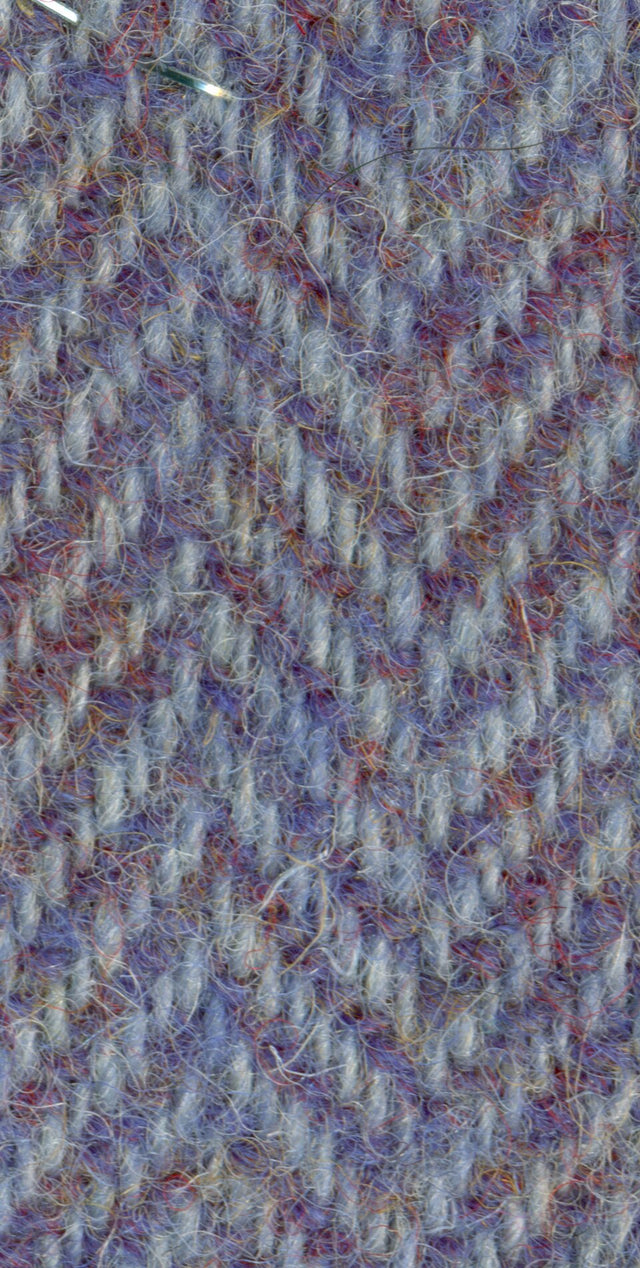
Wool cloth handwoven by islanders in their homes in the Outer Hebrides of Scotland, from wool dyed and spun there. Its name is protected by an Act of Parliament from 1993.
Origin
Outer Hebrides, Scotland
Technique
Handwoven twill and herringbone
Fiber
Wool
Best for
Jackets, coats, caps, bags
Tip: Use a walking foot and a 90/14 needle, press with a damp cloth, and dry clean finished pieces.
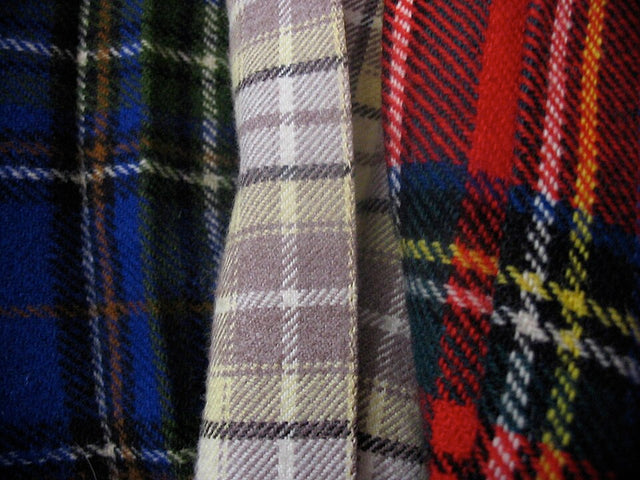
Wool woven in twill with colored stripes that cross at right angles, in a repeat called a sett. Many tartans belong to a clan, region or organization and are recorded in the Scottish Register of Tartans.
Origin
Scotland
Technique
Twill with yarn-dyed stripes
Fiber
Wool, also cotton and blends
Best for
Kilts, skirts, scarves, blankets, jackets
Tip: Buy extra to match the sett, and cut one layer at a time for perfect alignment.
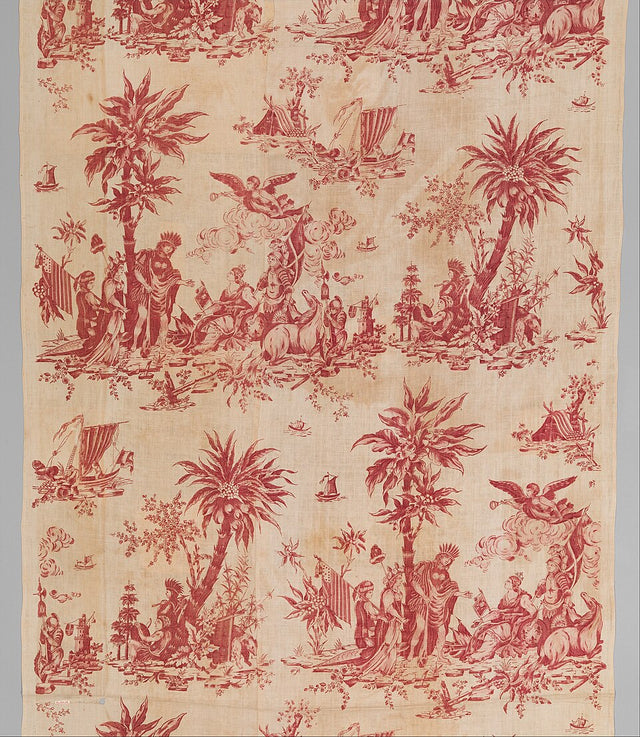
Cotton or linen printed in one color with detailed pastoral or story scenes. It is named after Jouy-en-Josas, near Versailles, where Christophe-Philippe Oberkampf opened his print works in 1760.
Origin
France
Technique
Copperplate and roller printing
Fiber
Cotton, linen
Best for
Curtains, upholstery, bedding, dresses
Tip: The repeats are large, so buy extra and center a full scene on cushions and chair backs.
Backstrap looms, reverse appliqué and bright embroidery, from the Andes to the American Southwest.
Aguayo
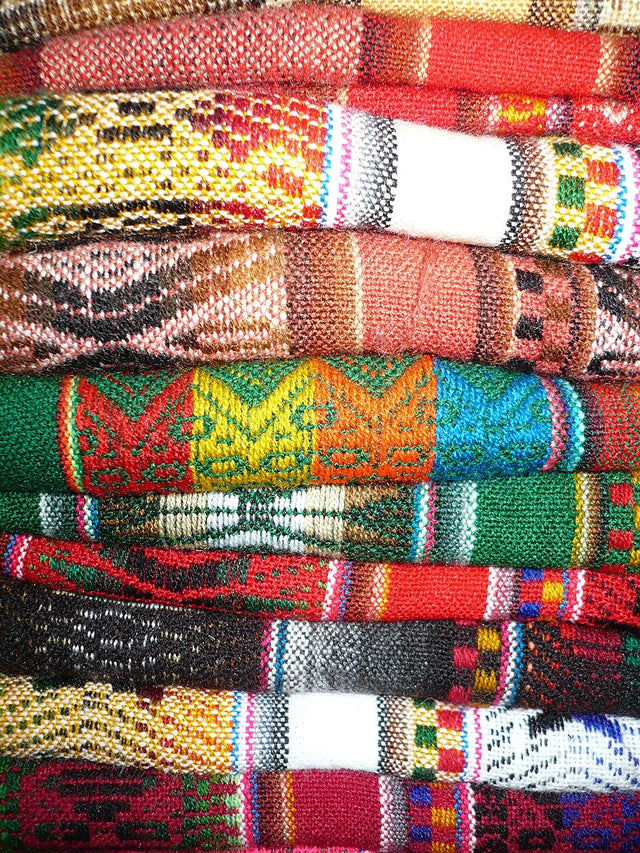
A square, brightly striped cloth from the Andes, used to carry babies and goods on the back. Older aguayos are handwoven from alpaca or sheep's wool; many today are factory-made.
Origin
Andes of Bolivia, Peru and Chile
Technique
Warp-faced weaving, by hand or machine
Fiber
Alpaca, sheep's wool, acrylic
Best for
Bags, cushions, jackets, upholstery accents
Tip: Factory aguayo is thick and stiff: use a denim needle, finish raw edges well and cut pieces so the stripes match.
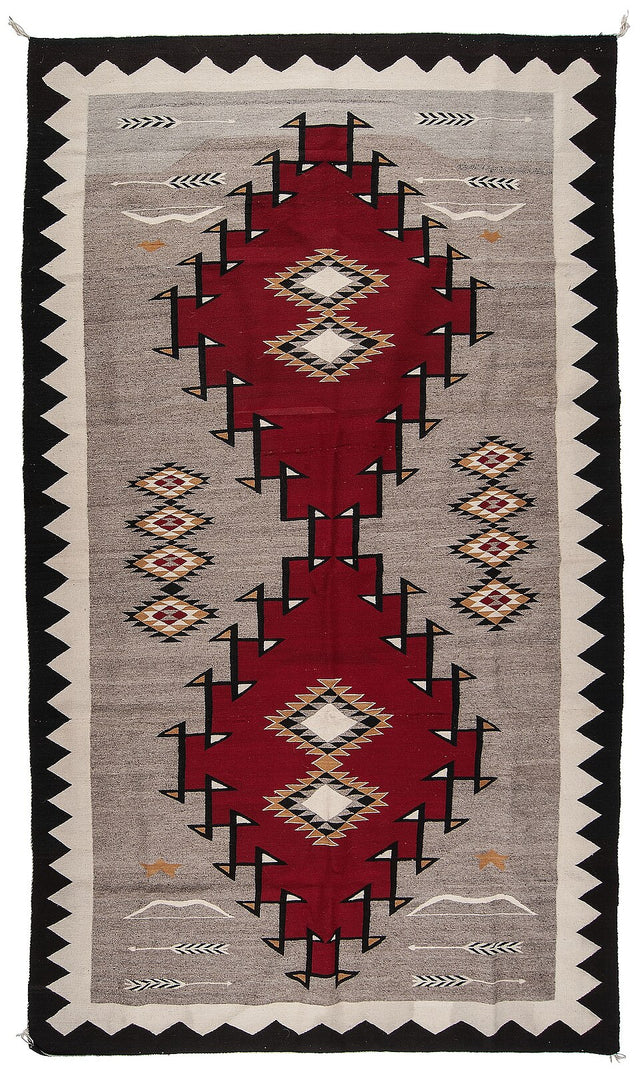
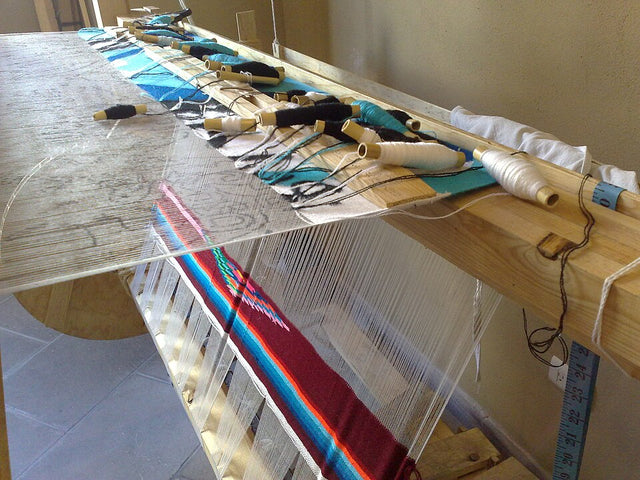
Rugs and blankets woven by Diné weavers on upright looms, often from wool they shear, spin and dye themselves. Regional styles include the bold red Ganado and the natural grays and browns of Two Grey Hills.
Origin
Navajo Nation, Southwestern US
Technique
Upright loom tapestry weaving
Fiber
Wool, often from Churro sheep
Best for
Rugs and wall hangings, as art
Tip: In the US, the Indian Arts and Crafts Act makes it illegal to sell work as Native American-made unless it is. Call look-alike prints Southwestern, and buy weavings from Diné artists.
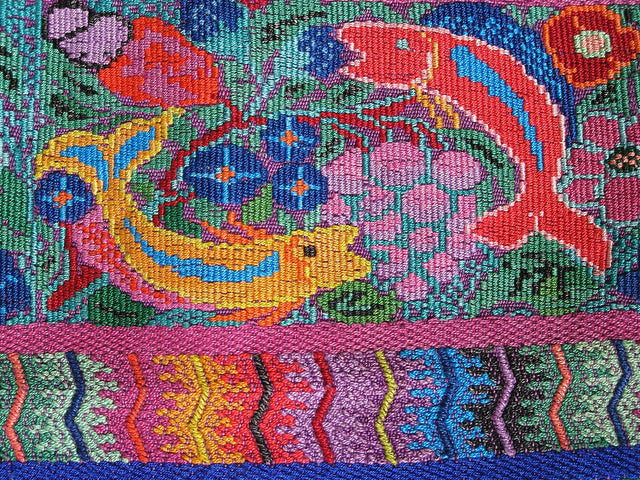
Maya women in Guatemala and southern Mexico weave cloth on backstrap looms, tied to a post at one end and held taut by the weaver's body. The patterns woven into huipils, or blouses, often show which town the weaver comes from.
Origin
Guatemala and Chiapas, Mexico
Technique
Backstrap loom with supplementary weft brocade
Fiber
Cotton, sometimes silk or acrylic
Best for
Huipils, table runners, bags, pillows
Tip: Handwoven panels are narrow, so plan your project around their width, and stitch near the brocade by hand so you don't cut into it.
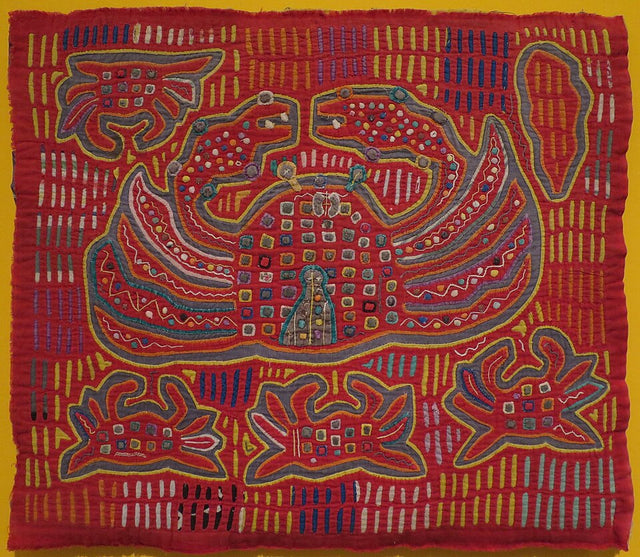
Panels made by Guna women of Panama and Colombia by layering colored cotton, cutting shapes away to show the colors below and hemming every edge by hand. Molas are sewn into the front and back of women's blouses.
Origin
Guna Yala, Panama, and Colombia
Technique
Reverse appliqué, hand stitched
Fiber
Cotton
Best for
Wall art, pillows, bag panels, framed pieces
Tip: One mola takes weeks of hand stitching. Buy from Guna artisans or cooperatives, and frame or appliqué it rather than cutting it.
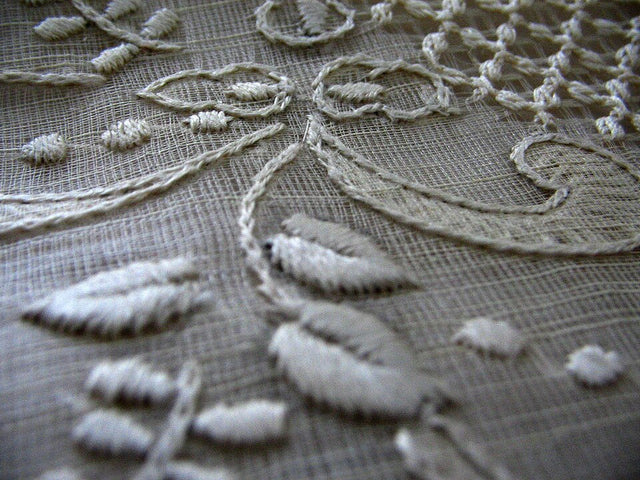
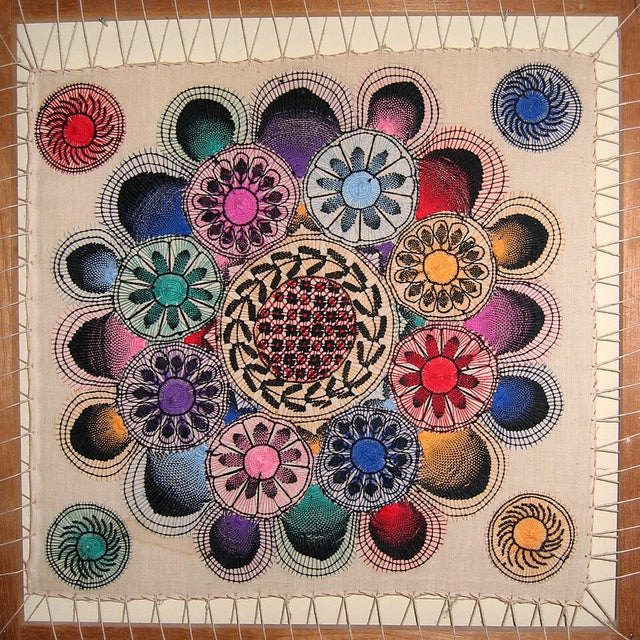
A Paraguayan needle lace of radiating wheels, worked on a frame over threads stretched like spokes. Its Guaraní name means spider web, and the town of Itauguá is its best-known home.
Origin
Paraguay
Technique
Needle lace worked on a frame
Fiber
Cotton, silk or synthetic thread
Best for
Collars, trims, doilies, appliqués, framed art
Tip: Hand-stitch ñandutí motifs onto a finished garment or frame them; machine stitching can pull the fine threads.
Photo: Trey Jones, public domain, via Wikimedia Commons
Sarape
A long, brightly striped Mexican blanket-shawl. The classic Saltillo sarape from Coahuila has narrow stripes in many colors, often with a diamond in the center.
Origin
Mexico, especially Saltillo
Technique
Treadle-loom weaving
Fiber
Wool, cotton, acrylic
Best for
Throws, table runners, bags, cushions
Tip: Sarapes are thick and loosely woven, so stay-stitch cut edges before sewing and use a long stitch.
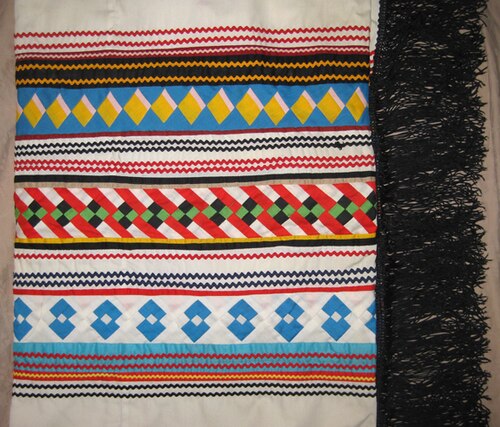
Bands of tiny geometric patterns made by sewing strips of fabric together, cutting them crosswise and sewing them back together. Seminole and Miccosukee women in Florida developed it in the early 1900s, after hand-cranked sewing machines arrived.
Origin
Florida, US
Technique
Machine-pieced strip patchwork
Fiber
Cotton, cotton blends
Best for
Skirts, jackets, bags, quilt borders
Tip: Precision matters: cut strips with a rotary cutter and sew exact 1/4 inch seams so the small shapes line up.
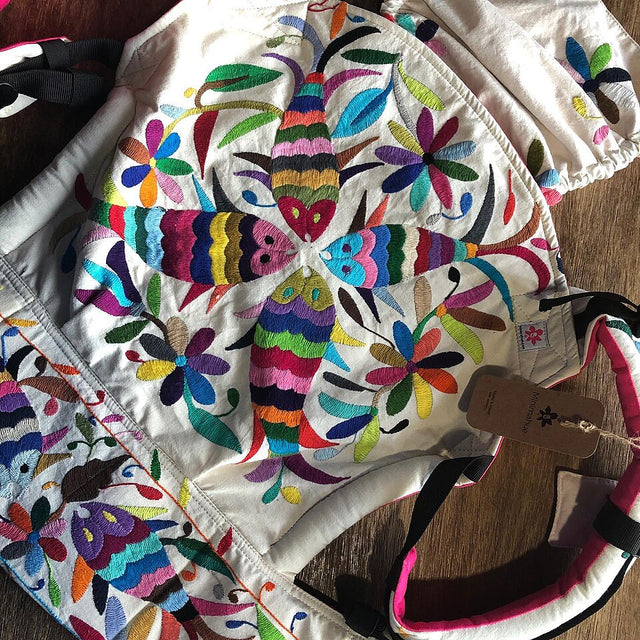
Lively embroidery of animals, plants and village life from Tenango de Doria in Hidalgo, Mexico, made by Otomí (Hñähñu) artisans. The designs are drawn on cotton and filled with satin stitch in many colors or just one.
Origin
Hidalgo, Mexico
Technique
Hand embroidery in satin stitch
Fiber
Cotton cloth and thread
Best for
Tablecloths, pillows, blouses, wall hangings
Tip: Big brands have been criticized for copying Tenango designs. Buy embroidered pieces directly from the makers, and wash them by hand in cold water.
What is the difference between batik and African wax print?
Batik is made by hand in Indonesia: wax is drawn or stamped on the cloth before each dye bath. African wax prints copy that look by machine, with a resin resist printed on both sides of cotton, and are worn mainly in West and Central Africa.
Is kente cloth woven or printed?
Real kente is handwoven in Ghana and Togo from narrow strips sewn together. Printed fabrics with kente patterns cost much less and are fine for everyday sewing, but they are prints, not kente.
What is the difference between ikat and tie-dye?
In ikat, the yarns are tied and dyed before weaving, so the pattern is woven in. In tie-dye, such as bandhani or shibori, the finished cloth is tied and then dyed.
How do I wash hand-dyed traditional fabrics?
Wash them separately in cold water with mild soap, dry them in the shade and do not soak them. Natural dyes and indigo can bleed or rub off, especially in the first few washes.
What is a mola?
A mola is a hand-sewn panel made by Guna women of Panama and Colombia using reverse appliqué: layers of colored cotton are cut away to show the colors below, and every edge is hemmed by hand.
Can I sew with traditional fabrics from another culture?
Yes, with care. Buy from the makers or fair-trade sellers, learn what the patterns mean, and keep ceremonial cloth for respectful uses. Printed versions are a good choice for everyday clothes.
🧵 Which fabric should we stock next?
See a fabric here that we don't carry yet, or can't find the one you need? Tell us what it is. We read every answer and use it to choose the fabrics we add next.
Thank you! We read every fabric wish.
About the photos: photos credited to Wikimedia Commons are used under the licenses linked under each photo, and are resized and may be cropped to fit. Photos marked KAHANNE show fabric from our store. Cards marked Illustration show drawn swatches, not photos.