Skip to content

🚚 Free Shipping Over $99 in the Contiguous U.S.

🧵 Buy More Yards, Save Up to 20%

Wholesale
Cart 1

Types of Knit and Stretch Fabric

Updated November 14, 2026 · KAHANNE Fabrics

Quick answer

A knit fabric is made from loops of yarn pulled through each other, like a hand-knit sweater but much finer. The loops let it stretch and recover, so knits are comfortable, resist wrinkles and usually don't fray. Knits are sold by weight in GSM and described by how they stretch: 2-way across the width, 4-way in both directions. Below are 19 knits with photos, stretch, weight and sewing tips.

Find a fabric fast

Showing 19 fabrics

Everyday knits

Soft, stretchy and comfortable: the fabrics behind T-shirts, hoodies, loungewear and baby clothes.

White brushed 3-end French terry

Brushed French terry (sweatshirt fleece)

French terry whose looped back is brushed into a soft, fuzzy nap. It is warmer than regular French terry and is the classic sweatshirt fabric.

Fiber
Cotton, cotton-polyester
Knit
3-end loop back, brushed
Stretch
Moderate, 2-way
Weight
Medium to heavy, 280–400 gsm (8–12 oz/yd²)
Best for
Sweatshirts, hoodies, joggers, kids' winter clothes

Tip: The brushed side sheds lint at first, so shake out cut pieces and clean your machine often.

3-end French terry in the dictionary

Shop brushed 3-end French terry →

Photo: KAHANNE

Diagram of a weft-knitted double knit structure

Double knit

A knit made on two sets of needles, so both faces are smooth and the fabric is thick, firm and stable. It does not curl and is easy to sew.

Fiber
Polyester, wool, rayon blends
Knit
Double knit
Stretch
Low to moderate
Weight
Medium to heavy, 250–350 gsm
Best for
Structured dresses, skirts, jackets, pants

Tip: Treat it almost like a woven: it holds its shape, so a regular stitch with a slight zigzag works well.

Double knit in the dictionary

Photo: Elkagye, CC BY-SA 3.0, via Wikimedia Commons

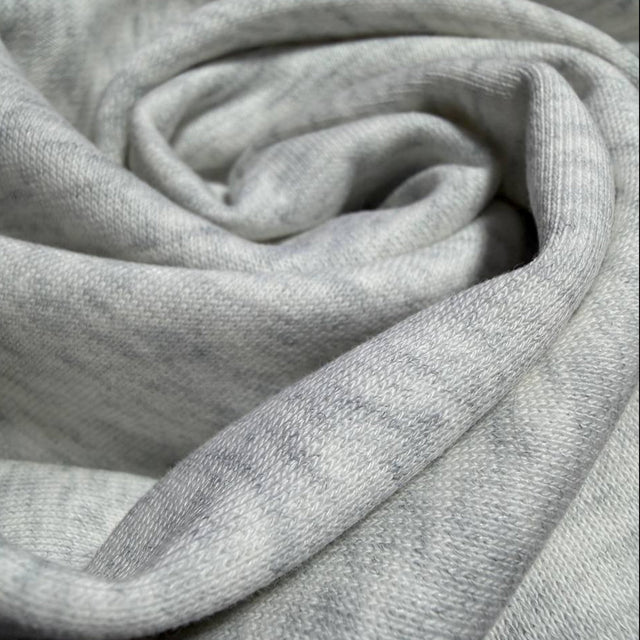
Gray melange French terry fabric

French terry

A knit that is smooth like jersey on the face, with soft loops on the back. It is lighter than sweatshirt fleece and breathes well, so it suits loungewear all year.

Fiber
Cotton, cotton-polyester, cotton-spandex
Knit
Single knit with a loop back
Stretch
2-way; 4-way with spandex
Weight
Medium, 220–350 gsm (6.5–10 oz/yd²)
Best for
Hoodies, sweatshirts, joggers, loungewear, baby clothes

Tip: Pair it with matching rib for cuffs and hems, and sew with a ballpoint needle and a stretch stitch.

French terry in the dictionary

Shop French terry, including 320 GSM →

Photo: KAHANNE

Close-up of smooth interlock knit fabric

Interlock

A double knit made of two interlocked layers of jersey, so both sides look like the smooth face of jersey. It is thicker and more stable than jersey and does not curl.

Fiber
Cotton, cotton-spandex, polyester
Knit
Double knit (interlock stitch)
Stretch
2-way
Weight
Medium, 180–260 gsm (5.3–7.7 oz/yd²)
Best for
Baby clothes, polo shirts, T-shirts, pajamas

Tip: Interlock can ladder from one cut edge, so finish raw edges soon after cutting.

Interlock in the dictionary

Photo: teslar, CC BY-SA 3.0, via Wikimedia Commons

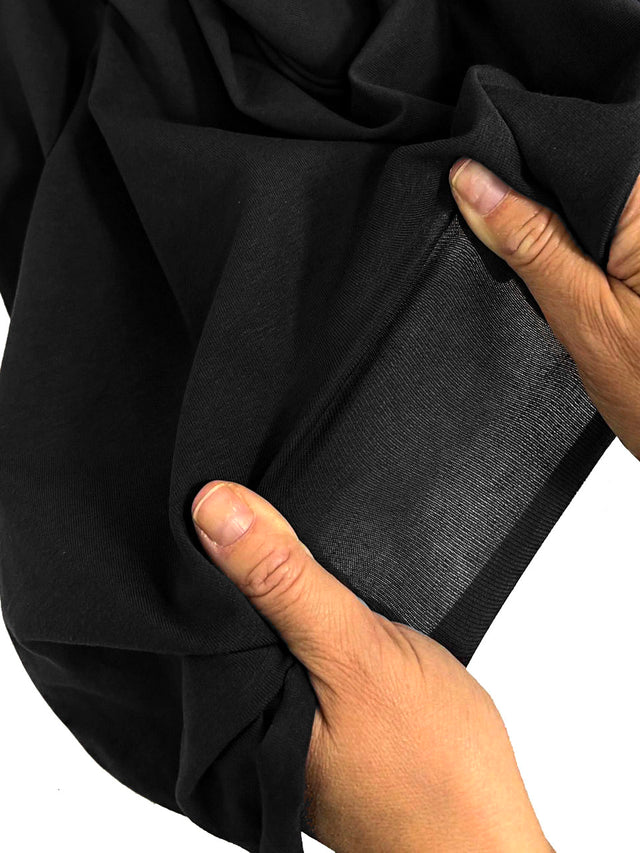
Black cotton single jersey knit fabric

Jersey (single jersey)

The most common knit: smooth V-shaped stitches on the face and small loops on the back, made on one set of needles. It stretches mostly across the width and curls at the cut edges.

Fiber
Cotton, cotton-spandex, rayon, modal, polyester
Knit
Single knit (plain stitch)
Stretch
2-way; 4-way with spandex
Weight
Light to medium, 120–220 gsm (3.5–6.5 oz/yd²)
Best for
T-shirts, dresses, leggings, pajamas, baby clothes

Tip: Use a ballpoint or stretch needle and a narrow zigzag or serger. Spray starch on the edges stops them from curling.

Jersey in the dictionary

Shop our 180 GSM cotton jersey →

Photo: KAHANNE

Piqué knit

A knit with a fine textured surface of tiny raised cells, made with tuck stitches. It breathes well and holds its shape, which is why it is the classic polo shirt fabric.

Fiber
Cotton, cotton-polyester
Knit
Textured knit with tuck stitches
Stretch
Low to moderate
Weight
Medium, 180–240 gsm
Best for
Polo shirts, sport shirts, kids' wear

Tip: Use a ballpoint needle and a twin needle for hems, and interface the placket so buttonholes stay flat.

Woven piqué

Cream polar fleece texture

Polar fleece

A synthetic knit, usually polyester, brushed on both sides into a thick, lofty pile that traps warmth. It is light, dries fast and does not fray.

Fiber
Polyester, recycled polyester
Knit
Knit, brushed and sheared on both sides
Stretch
Moderate; some contain spandex
Weight
Medium to heavy, 200–400 gsm
Best for
Jackets, blankets, hats, scarves, linings

Tip: The edges don't fray, so you can leave hems raw. Use a walking foot and keep a hot iron away, because polyester melts.

Fleece in the dictionary

Photo: Rico Cilliers and colormass via Poly Haven, CC0, via Wikimedia Commons

Ponte (ponte di Roma)

A firm double knit, usually rayon, nylon and spandex, with a subtle ridge. It drapes but holds its shape, which makes it a favorite for comfortable workwear.

Fiber
Rayon, nylon, polyester, spandex
Knit
Double knit
Stretch
Moderate, 2-way or 4-way
Weight
Medium to heavy, 280–350 gsm
Best for
Pants, pencil skirts, dresses, blazers

Tip: Use a stretch needle and a lightning or narrow zigzag stitch. Ponte presses well with steam.

Ponte in the dictionary

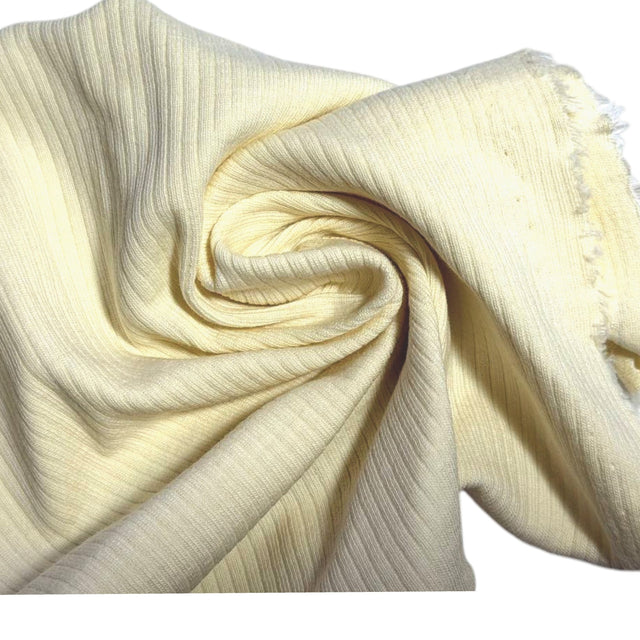
Cream cotton rib knit fabric

Rib knit

A knit with raised vertical ribs of knit and purl stitches, such as 1x1 or 2x2 rib. It stretches a lot across the width and springs back, which makes it the standard for cuffs and neckbands.

Fiber
Cotton, cotton-spandex, rayon, lyocell
Knit
Rib stitch (1x1, 2x2)
Stretch
2-way, very stretchy; 4-way with spandex
Weight
Medium, 200–300 gsm (6–9 oz/yd²)
Best for
Cuffs, neckbands, waistbands, fitted tops, dresses

Tip: Cut neckbands about 10 to 15 percent shorter than the neckline and stretch them evenly as you sew.

Rib knit in the dictionary

Shop cotton, rayon and lyocell rib →

Photo: KAHANNE

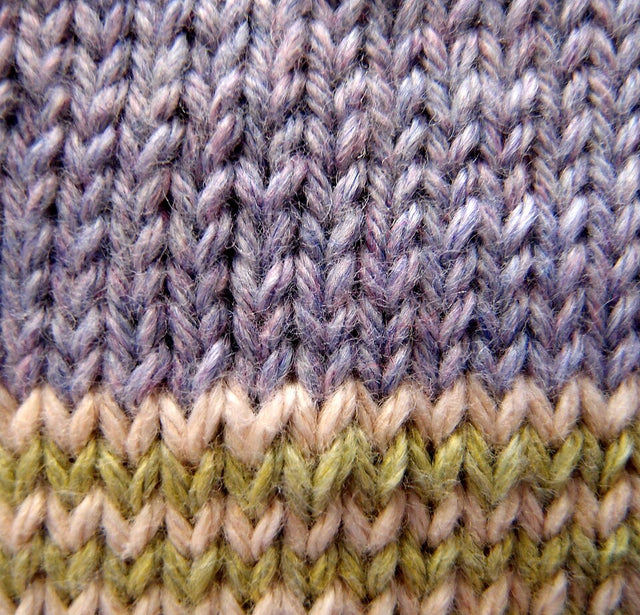
Hand-knit stockinette stitch showing rows of V-shaped loops

Sweater knit

A loosely knitted fabric made from thicker yarn, with visible stitches like a hand-knit sweater. It can be plain stockinette, cable or textured.

Fiber
Wool, acrylic, cotton, blends
Knit
Single or double knit, open gauge
Stretch
High, 2-way
Weight
Medium to heavy
Best for
Cardigans, sweaters, wraps, beanies

Tip: Stabilize shoulder seams with tape so they don't stretch, and finish edges right away because loose knits can run.

How knits are made

Photo: Pschemp, CC BY-SA 3.0, via Wikimedia Commons

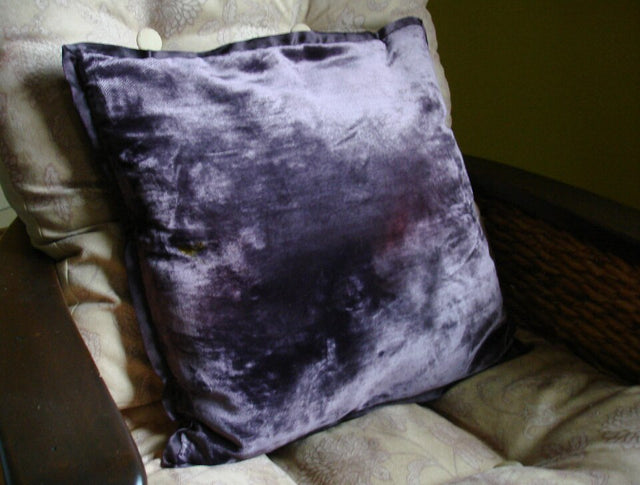
Purple velour pillow with a soft, shiny pile

Velour

A knit with a short, dense cut pile, like a stretchy version of velvet. It is soft and plush and drapes well.

Fiber
Cotton, polyester, spandex blends
Knit
Knit with cut pile
Stretch
2-way; 4-way with spandex
Weight
Medium, 200–300 gsm
Best for
Tracksuits, robes, dancewear, baby clothes, plush toys

Tip: It has a nap, so cut every piece in the same direction and press only from the back with steam.

Velour in the dictionary

Photo: Stilfehler, CC BY-SA 3.0, via Wikimedia Commons

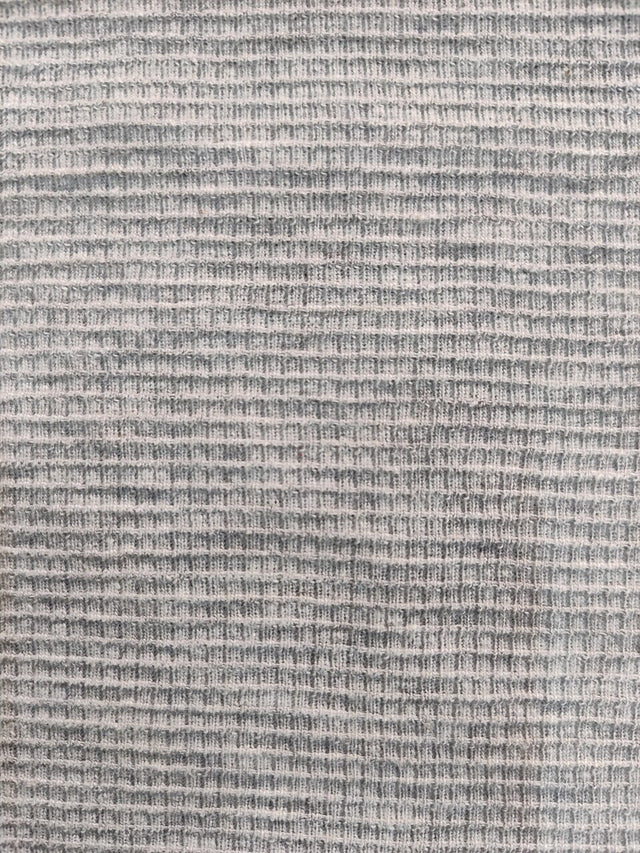
Gray waffle knit fabric with a grid texture

Waffle knit (thermal)

A knit with a raised square grid, like a waffle, that traps warm air. It is the classic fabric for thermal underwear and long-sleeve tops.

Fiber
Cotton, cotton-polyester
Knit
Textured knit with tuck stitches
Stretch
Moderate, 2-way
Weight
Medium, 180–280 gsm
Best for
Thermal tops, henleys, pajamas, baby clothes

Tip: Waffle knit shrinks noticeably, so prewash it twice and sew with a ballpoint needle.

Waffle weave, the woven version

Photo: RAJIVVASUDEV, CC BY-SA 4.0, via Wikimedia Commons

Stretch, dance and specialty knits

High-stretch, shiny and plush knits for swimwear, activewear, dance costumes and cold weather.

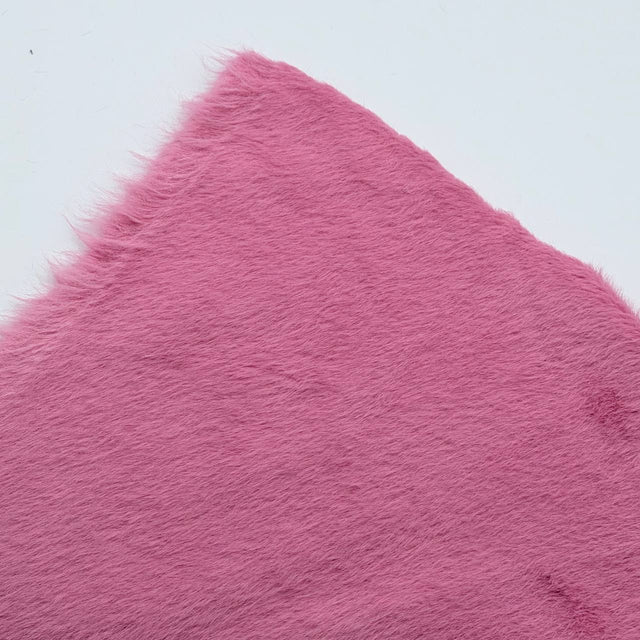
Pink short pile faux fur fabric

Faux fur

A pile fabric of acrylic or polyester fibers knitted into a backing, made to look like animal fur. Pile length ranges from short plush to long shaggy fur.

Fiber
Acrylic, modacrylic, polyester
Knit
Sliver-knit pile
Stretch
Low to moderate, mostly in the backing
Weight
Medium to heavy
Best for
Coats, collars, cuffs, costumes, plush toys, pillows

Tip: Cut from the back with a craft knife or scissor tips, cutting only the backing so the pile stays long.

Faux fur in the dictionary

Shop faux fur →

Photo: KAHANNE

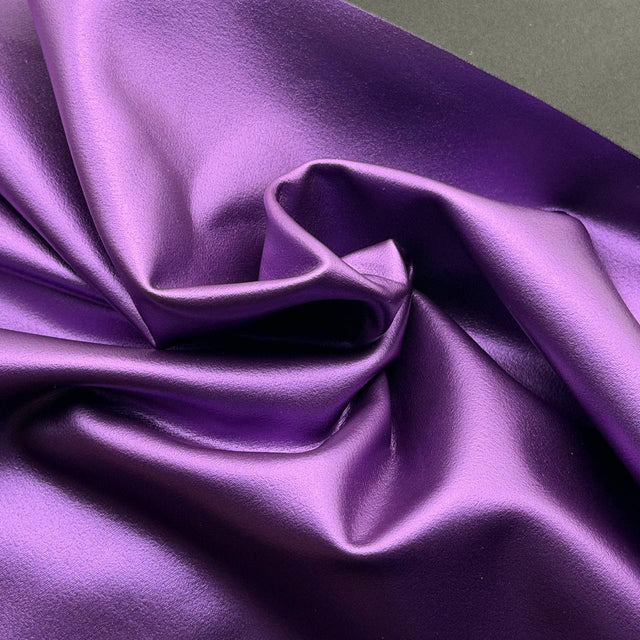
Purple matte faux leather foil spandex

Faux leather spandex

Nylon spandex with a matte or satin metallic coating that looks like leather but keeps 4-way stretch.

Fiber
Nylon, spandex, foil coating
Knit
Knit with foil coating
Stretch
4-way
Weight
Medium
Best for
Leggings, dance costumes, bodysuits, skirts

Tip: Pins leave holes, so use clips, and switch to a Teflon or roller foot if the coating sticks.

Foil spandex in the dictionary

Shop faux leather spandex →

Photo: KAHANNE

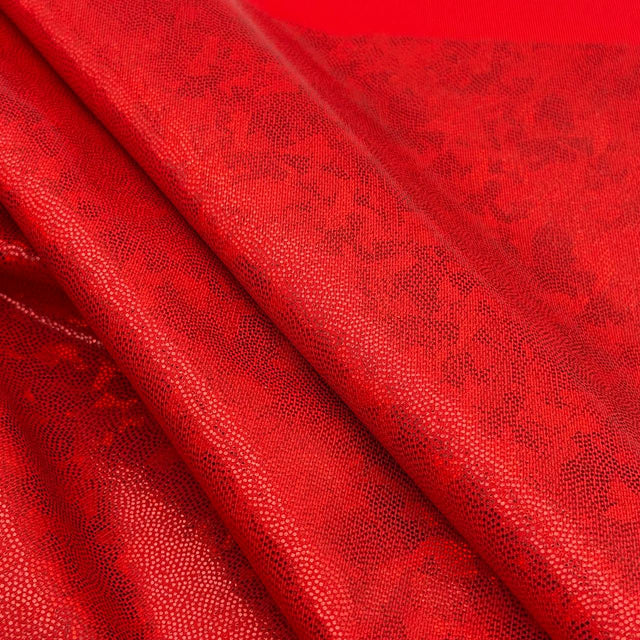
Red shattered glass holographic spandex

Holographic spandex

Stretch fabric with a holographic film that reflects rainbow colors as it moves, in patterns such as shattered glass or scales.

Fiber
Nylon or polyester, spandex, holographic foil
Knit
Warp knit with holographic finish
Stretch
4-way
Weight
Medium
Best for
Dance costumes, stage outfits, cosplay, rave wear

Tip: Test heat on a scrap first, because holographic finishes can melt. Sew with polyester thread and a stretch stitch.

Holographic fabric in the dictionary

Shop holographic spandex →

Photo: KAHANNE

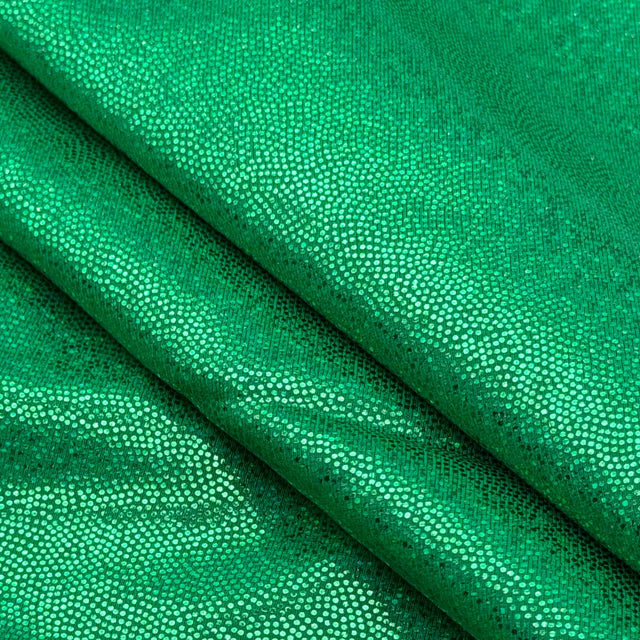
Emerald green mystique foil spandex

Mystique foil spandex

Nylon spandex with a shiny metallic foil printed on the face, often in a scattered or dotted pattern. It catches stage lights and keeps its full 4-way stretch.

Fiber
Nylon, spandex, foil finish
Knit
Warp knit with foil print
Stretch
4-way
Weight
Medium, 200–250 gsm
Best for
Dance and skating costumes, leotards, cheer uniforms, swimwear

Tip: Never iron the foil side. Use a stretch needle and clips instead of pins, which can mark the foil.

Mystique spandex in the dictionary

Shop mystique and foil spandex →

Photo: KAHANNE

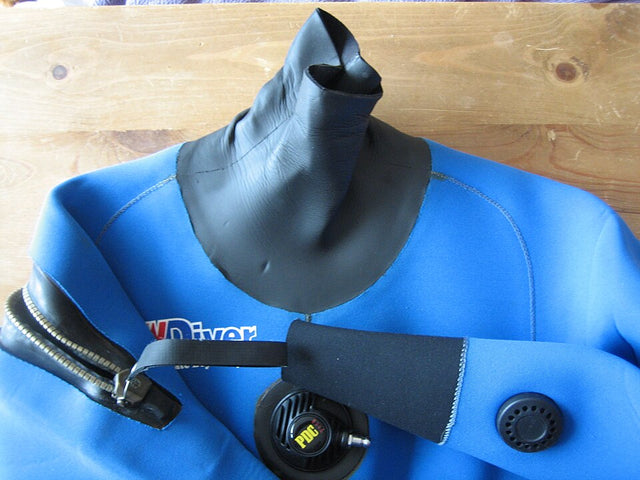
Blue neoprene diving suit

Neoprene

Synthetic rubber foam laminated with knit fabric on one or both sides. It insulates, cushions and keeps its shape; scuba knit is a thinner, all-fabric look-alike.

Fiber
Neoprene foam with nylon or polyester knit
Knit
Foam laminated between knits
Stretch
Moderate, 4-way
Weight
Heavy, 1–7 mm thick
Best for
Wetsuits, laptop sleeves, sportswear, structured skirts

Tip: Use a stretch or leather needle and a longer stitch; flat seams or binding cut the bulk.

Neoprene in the dictionary · Scuba knit in the dictionary

Photo: Mark.murphy, public domain, via Wikimedia Commons

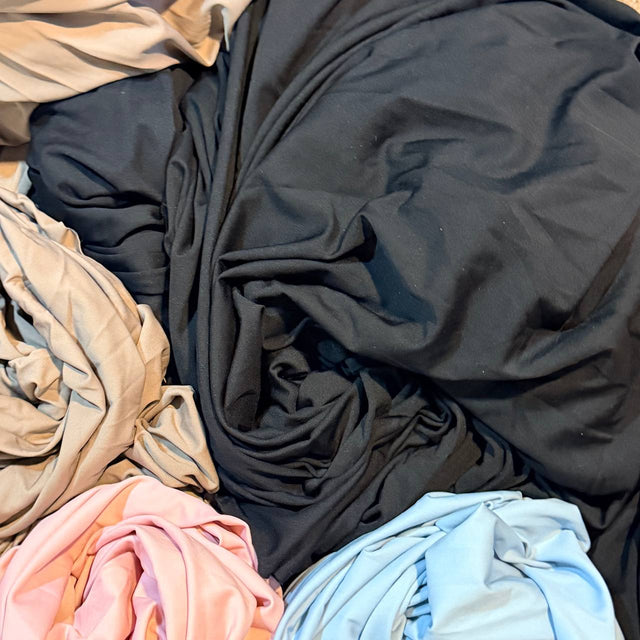
Matte nylon spandex fabric in several colors

Nylon spandex

A smooth knit of nylon with about 15 to 25 percent spandex, with strong 4-way stretch and recovery. Matte versions suit swimwear and activewear; shiny versions suit dance and costumes.

Fiber
Nylon and spandex (elastane)
Knit
Warp or circular knit
Stretch
4-way, high recovery
Weight
Light to medium, 180–250 gsm
Best for
Swimsuits, leggings, leotards, dancewear, activewear

Tip: Sew with a stretch needle, polyester thread and a zigzag or serger. See our swimsuit guide.

Nylon spandex in the dictionary

Shop matte nylon spandex →

Photo: KAHANNE

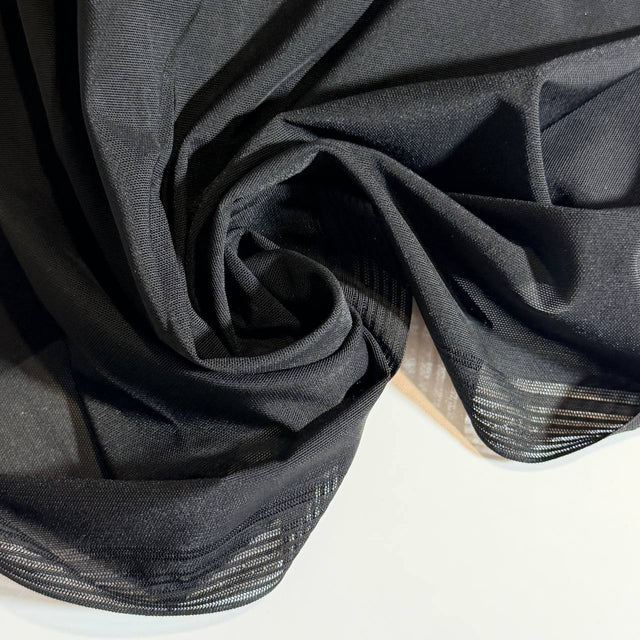
Black power mesh fabric

Power mesh

A light, sheer stretch mesh of nylon and spandex with strong recovery. It shapes and supports without bulk.

Fiber
Nylon and spandex
Knit
Warp-knit mesh
Stretch
4-way, firm
Weight
Light, 90–150 gsm
Best for
Swimsuit and shapewear linings, sleeves, insets, dance costumes

Tip: Use two layers for firmer control, and sew with a stretch needle and a narrow zigzag.

Power mesh in the dictionary

Shop power mesh →

Photo: KAHANNE

How to test stretch

Patterns for knits list how much stretch they need. Check before you buy or cut:

  1. Fold the fabric on the crosswise grain and mark 10 cm (4 in).
  2. Hold one mark at zero on a ruler and gently stretch.
  3. If it reaches 12.5 cm (5 in), it has 25 percent stretch; 15 cm (6 in) means 50 percent.
  4. Let go: good recovery means it snaps back without rippling.
Stretch Typical fabrics Use it for
Up to 25% Interlock, double knit, ponte Structured dresses, pants, jackets
25 to 50% Jersey, French terry, velour T-shirts, hoodies, loungewear
50 to 75% Rib knit, cotton-spandex jersey Fitted tops, cuffs, neckbands
75% and up Nylon spandex, power mesh, foil spandex Swimwear, leggings, dancewear

See also stretch percentage, 2-way and 4-way stretch.

How to sew knit fabric

  • Needle: a ballpoint needle for cotton knits and a stretch needle for spandex, usually size 75/11 or 90/14.
  • Stitch: a narrow zigzag, a lightning stitch or a serger, so seams stretch with the fabric. Hem with a twin needle.
  • Don't pull: let the feed dogs move the fabric, except when you are stretching a neckband or elastic on purpose. A walking foot helps.
  • Stabilize: tape shoulder seams and interface buttonholes so they keep their shape.
  • Prewash: cotton knits often shrink 5 percent or more. See how to prepare fabric before sewing.

See also types of woven fabric, silk, satin and lace fabrics and the full types of fabric A to Z, or work out yardage with our Fabric Calculator.

FAQ

What is the difference between knit and woven fabric?

Knit fabric is made of interlocking loops of yarn, so it stretches and recovers and rarely wrinkles. Woven fabric crosses two sets of yarns at right angles, so it is stable and stretches only on the bias. See types of woven fabric.

What is the difference between 2-way and 4-way stretch?

2-way stretch fabric stretches in one direction, usually across the width. 4-way stretch fabric stretches both across and along the length, which swimwear, leggings and dancewear need.

What does GSM mean for knit fabric?

Grams per square meter, the weight of the fabric. T-shirt jersey is usually 140 to 200 GSM, French terry 240 to 350 GSM and sweatshirt fleece 280 to 400 GSM.

Which needle should I use for knits?

A ballpoint (jersey) needle for cotton knits and a stretch needle for spandex knits, usually size 75/11 to 90/14. Polyester thread has a little give and suits stretch seams.

Do knit fabrics fray?

Most knits do not fray, but many curl at the cut edges and some can ladder from one end. Finish edges with a serger or zigzag on garments that are washed often.

🧵 Which fabric should we stock next?

See a fabric here that we don't carry yet, or can't find the one you need? Tell us what it is. We read every answer and use it to choose the fabrics we add next.

We use your answers only to decide which fabrics to stock and to email you when your fabric arrives. We never sell or share them. Please don't include other personal details. Privacy Policy

About the photos: photos credited to Wikimedia Commons are used under the licenses linked under each photo, and are resized and may be cropped to fit. Photos marked KAHANNE show fabric from our store. Cards marked Illustration show drawn swatches, not photos.