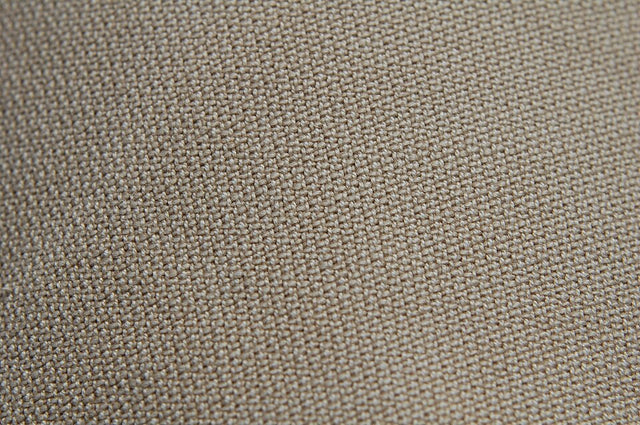
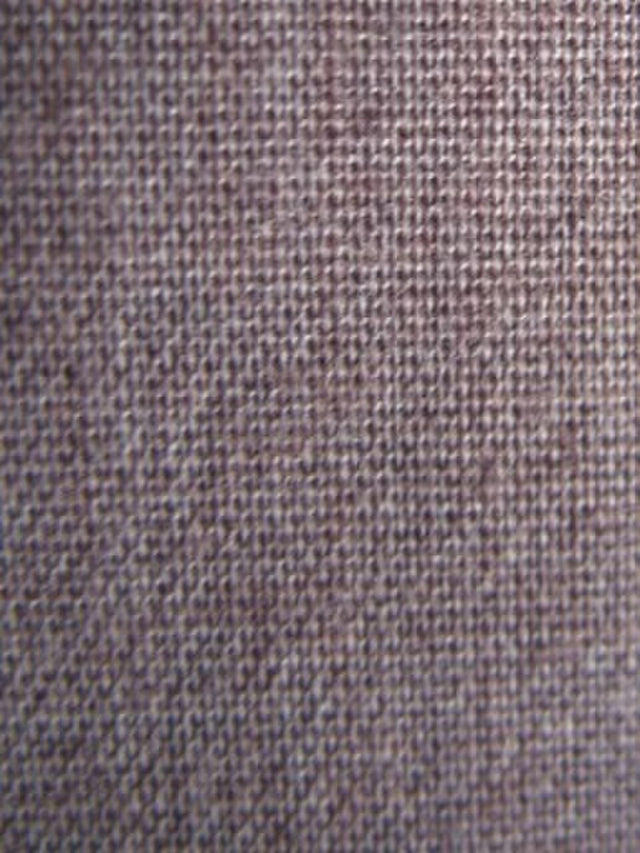
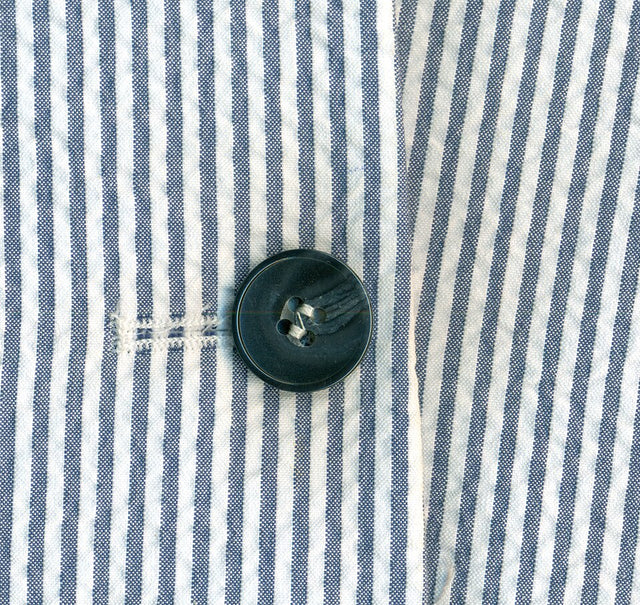
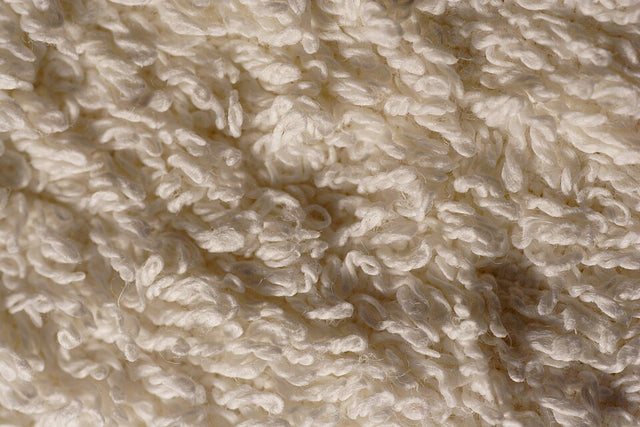
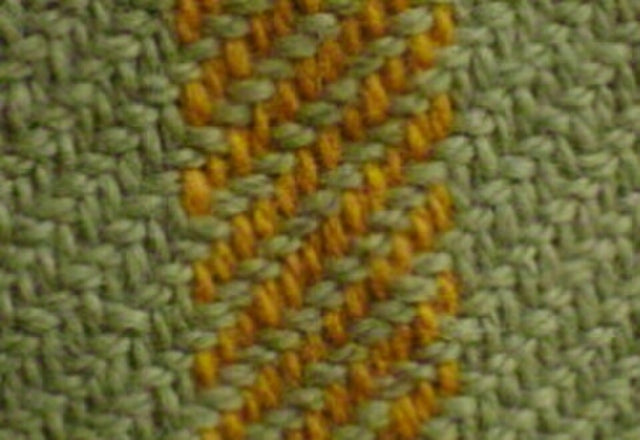
A woven fabric is made by interlacing two sets of yarns at right angles: the lengthwise warp and the crosswise weft. How they cross (plain, twill, satin, basket or pile) and the fiber decide how the fabric looks, drapes and wears. Woven fabrics are stable, hold a crease, fray at cut edges and stretch only on the bias unless spandex is added. Below are 44 types of woven fabric with photos, weights and sewing tips.
Find a fabric fast
Showing 44 fabrics
Weaves at a glance
Every woven fabric uses one of a few basic structures. Knowing the weave tells you how a fabric will drape, wear and sew.
The everyday workhorses: breathable, easy to sew and easy to wash. Most shirts, dresses, quilts and summer clothes start here.
Aida cloth
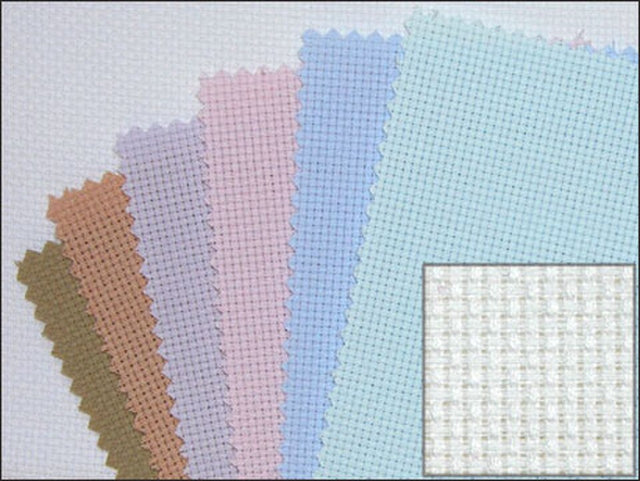
A cotton cloth woven in tiny, even squares with a hole at each corner, made for counted cross stitch. The count tells you how many squares fit in one inch, usually 11, 14, 16 or 18.
Fiber
Cotton, also linen and blends
Weave
Even basket weave with holes
Weight
Medium, lightly stiffened
Best for
Cross stitch, samplers, bookmarks, ornaments
Tip: Start with 14-count, a size 24 tapestry needle and two strands of embroidery floss.
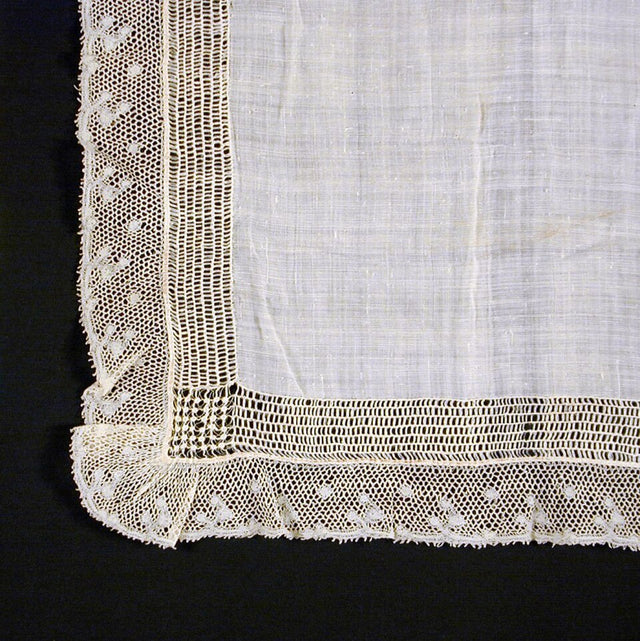
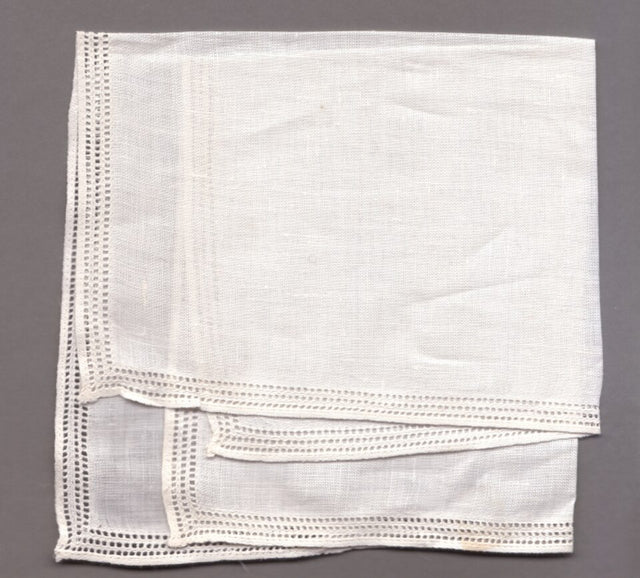
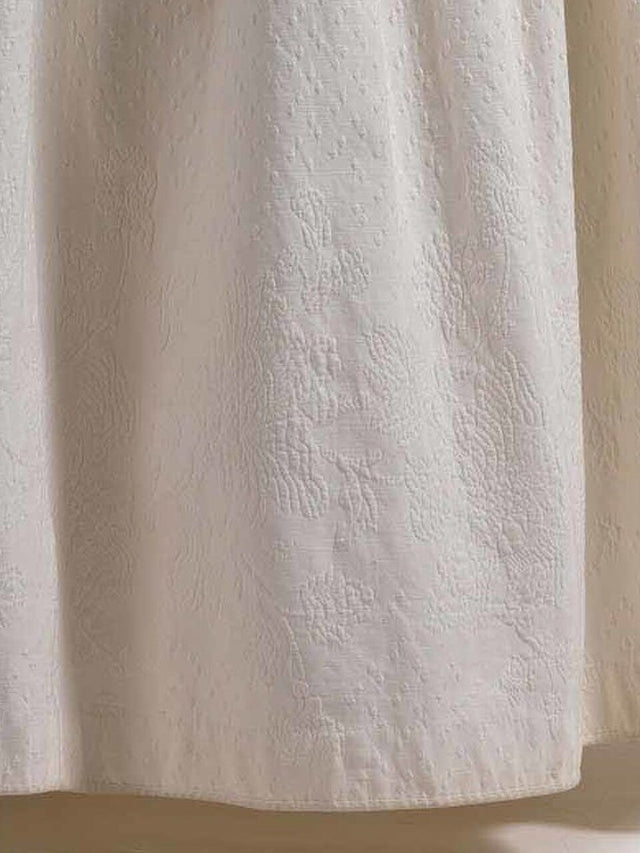
A fine, soft, lightweight plain weave made from tightly twisted yarns, in cotton, linen or blends. It is smooth and slightly sheer, the classic choice for heirloom sewing and handkerchiefs.
Photo: LACMA, public domain, via Wikimedia Commons
Broadcloth
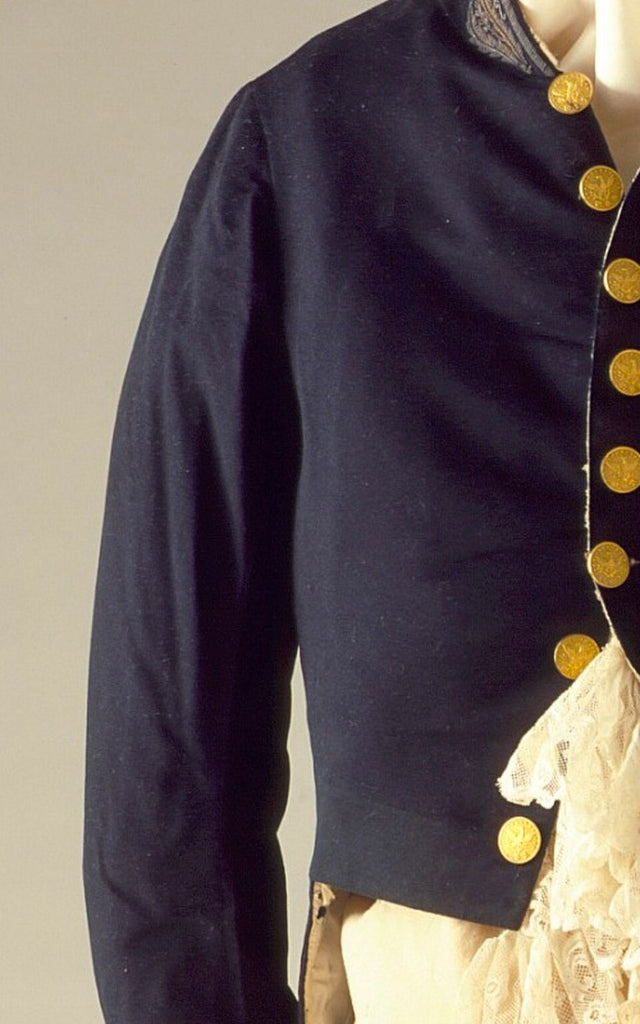
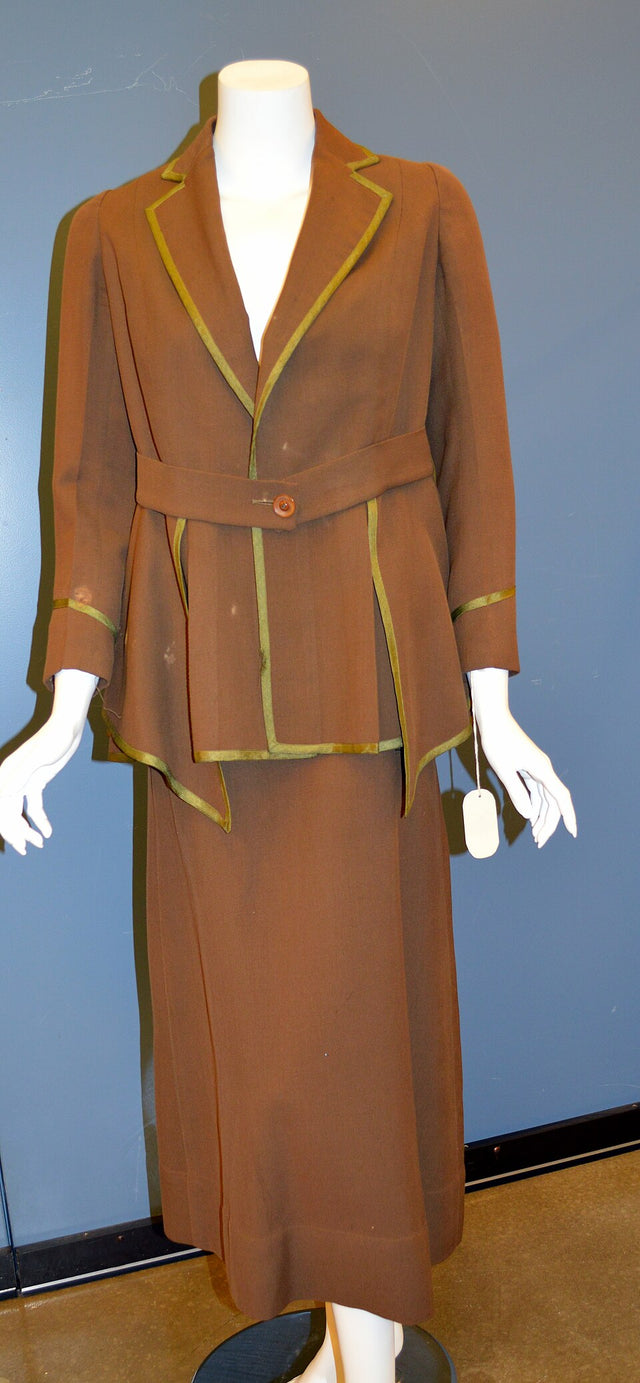
In the U.S., broadcloth is a smooth, tightly woven cotton or poly-cotton plain weave, nearly the same as poplin. The original broadcloth was a dense, felted wool woven on wide looms, like the uniform shown here.
Fiber
Cotton, poly-cotton; wool originally
Weave
Plain, fine rib
Weight
Light, 3–4.5 oz/yd² (100–150 gsm)
Best for
Shirts, quilting, costumes, linings
Tip: Solid broadcloth is inexpensive and great for practice and costumes. Prewash it, because it can shrink.
Photo: LACMA, public domain, via Wikimedia Commons
Calico
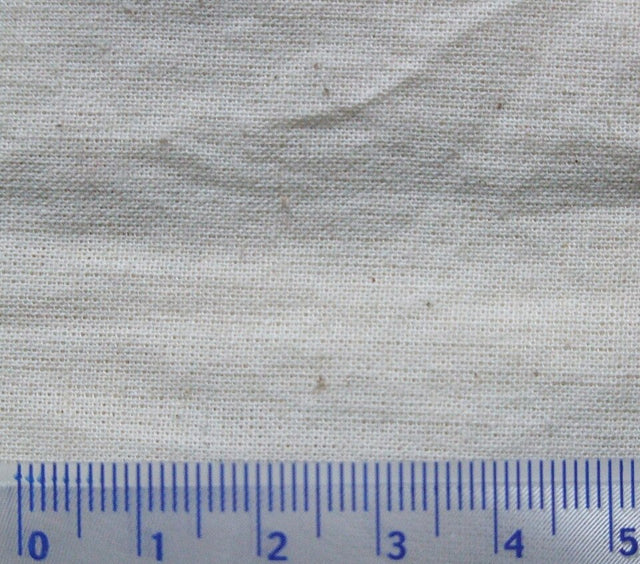
A plain-woven cotton named after Calicut in India. In the U.S. it means cotton printed with small all-over flowers; in the U.K. calico is plain unbleached cotton, which Americans call muslin.
Fiber
Cotton
Weave
Plain
Weight
Light to medium, 3–5 oz/yd² (100–170 gsm)
Best for
Quilts, dresses, aprons, test garments, crafts
Tip: Small prints hide uneven stitching, so calico is forgiving for a first quilt or dress.
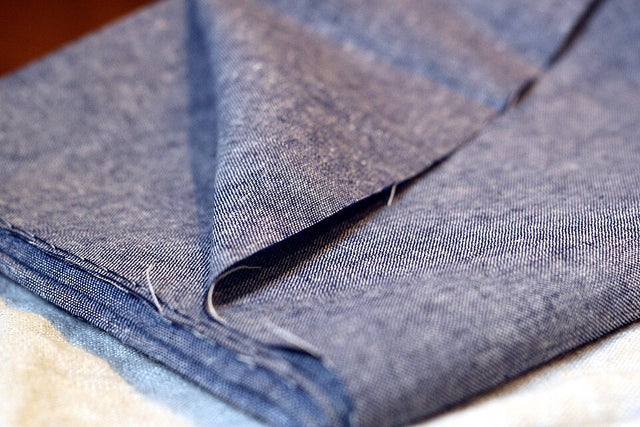
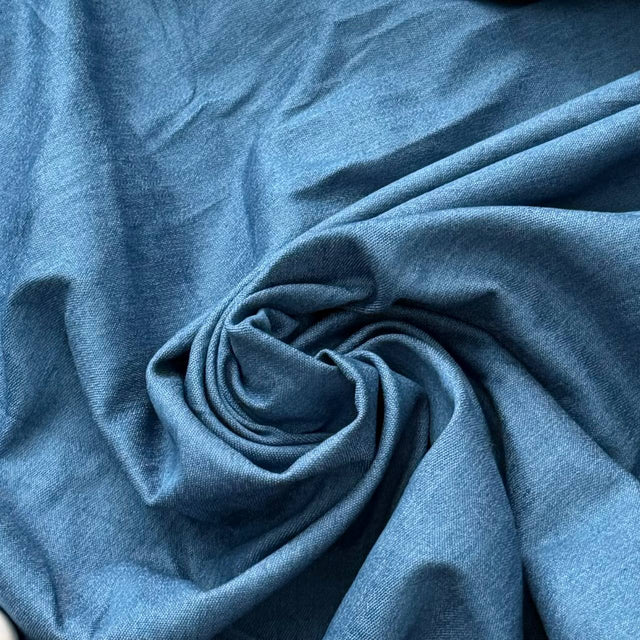
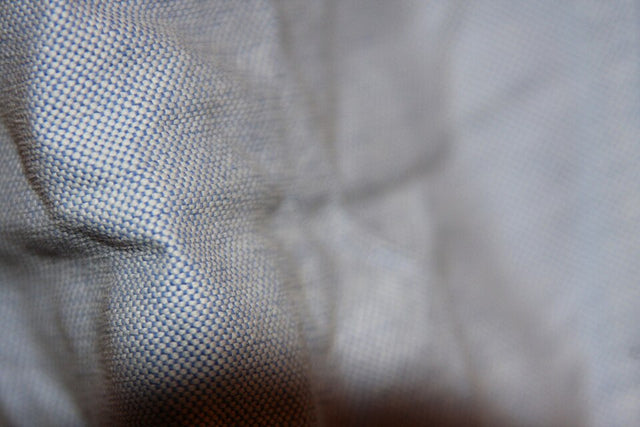
A plain weave with a colored warp and a white weft, which gives it a soft, heathered look. It resembles light denim but is lighter, smoother and plain woven instead of twill.
Fiber
Cotton, linen, blends
Weave
Plain, colored warp and white weft
Weight
Light, 3–5 oz/yd² (100–170 gsm)
Best for
Shirts, dresses, kids' clothes, summer pants
Tip: Both sides look almost the same, so mark the wrong side with chalk before you cut.
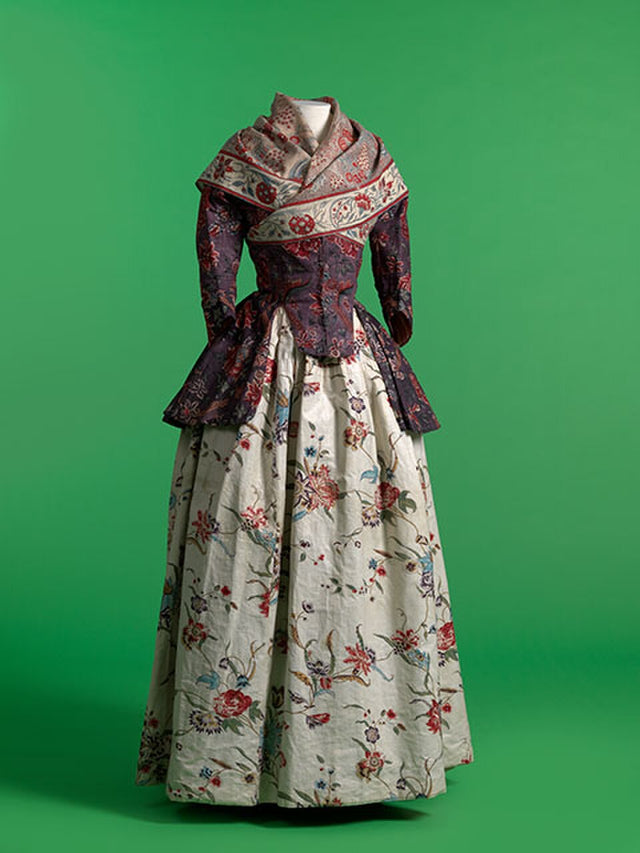
A printed cotton with a glazed, slightly shiny finish, usually with large flowers or birds. It began as painted and block-printed cotton from India and was hugely popular in Europe in the 1600s and 1700s.
Fiber
Cotton
Weave
Plain, glazed
Weight
Light to medium, 3–6 oz/yd² (100–200 gsm)
Best for
Curtains, slipcovers, cushions, quilts, dresses
Tip: Washing removes the glaze. Dry clean decor chintz, or accept a softer, matte look.
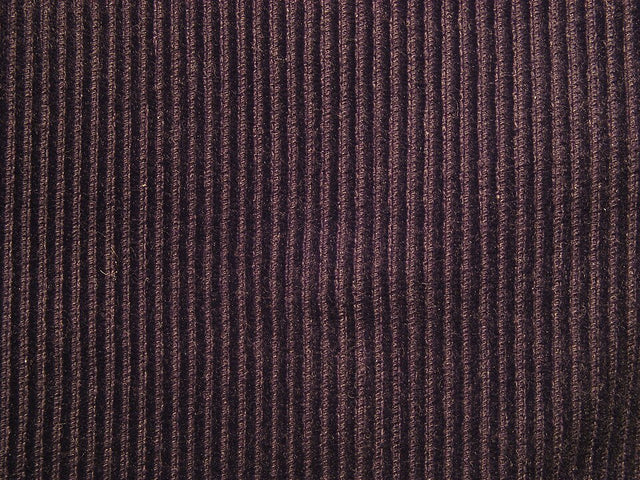
A cotton fabric with raised cords, called wales, made from extra weft yarns that are cut into pile. Wale count is the number of cords per inch: pinwale is fine at 14 or more, and wide wale has 8 or fewer.
Fiber
Cotton, cotton-spandex
Weave
Cut weft pile in rows
Weight
Medium to heavy, 6–14 oz/yd² (200–470 gsm)
Best for
Pants, jackets, skirts, kids' overalls
Tip: Corduroy has a nap: cut every piece in the same direction, press from the back on a towel and use a walking foot.
A warp-faced cotton twill woven with an indigo-dyed warp and a white weft, so it is blue on the face and lighter on the back. Stretch denim adds a little spandex for comfort.
Fiber
Cotton, cotton-spandex
Weave
Twill, usually 3/1
Weight
Light to heavy, 4–16 oz/yd² (140–540 gsm)
Best for
Jeans, jackets, skirts, bags, overalls
Tip: Use a 100/16 denim needle and strong polyester thread. Hammer thick seams flat before you sew over them.
A sheer, crisp cotton with raised cords that form stripes or checks, made by weaving two or more threads as one. The name comes from the Greek for double thread.
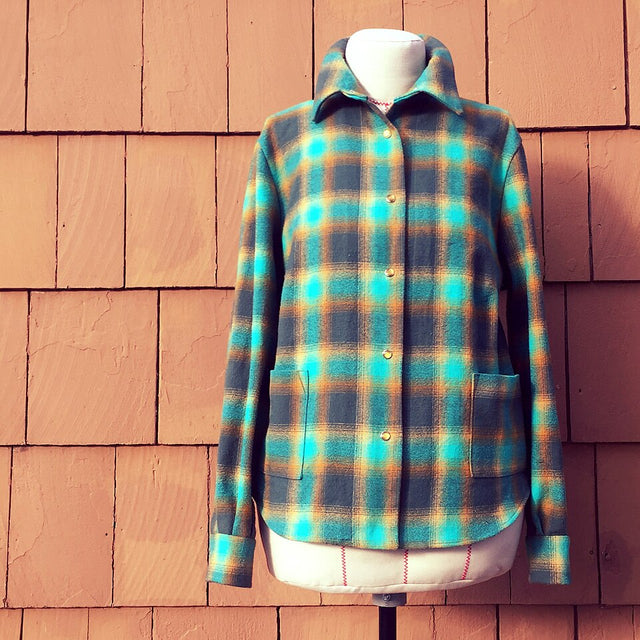
A soft woven fabric brushed on one or both sides to raise a fuzzy nap. Cotton flannel is used for shirts and pajamas; wool flannel, the original from Wales, is used for suits and skirts.
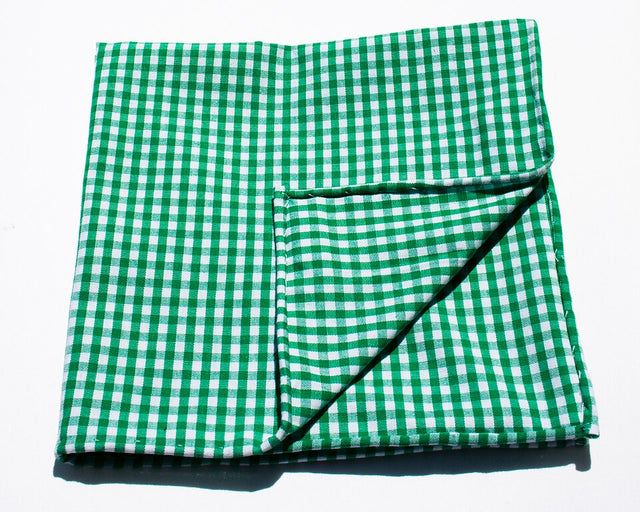
A plain-woven cotton with an even check made from dyed yarns, usually one color plus white. Because the colors are woven in, the check looks the same on both sides.
A fine, lightweight plain weave with a smooth, crisp finish, usually cotton. It is crisper and a little more opaque than voile, and named after Laon in France, where linen lawn was first woven.
Fabric woven from flax fibers, one of the oldest textiles in the world. It is strong, cool and absorbent, wrinkles easily, and gets softer with every wash.
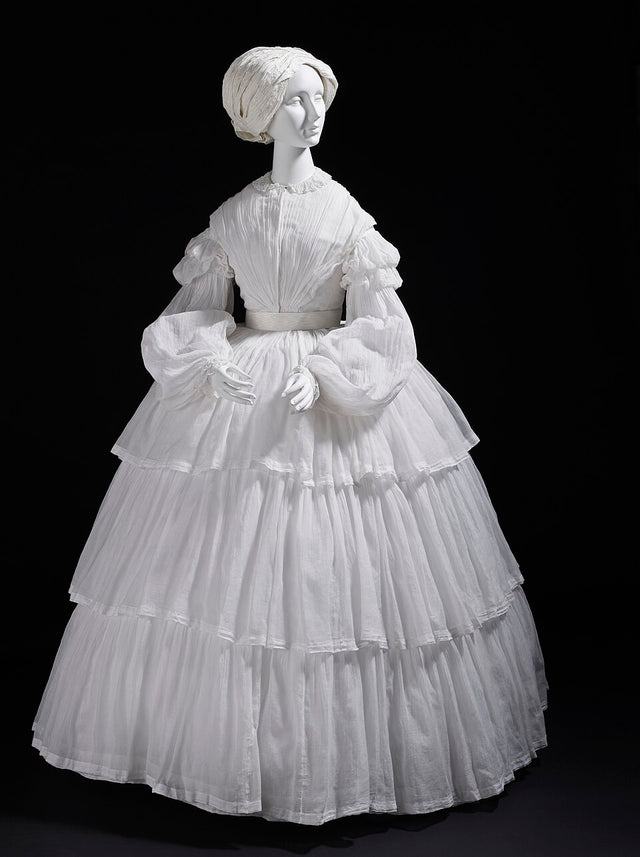
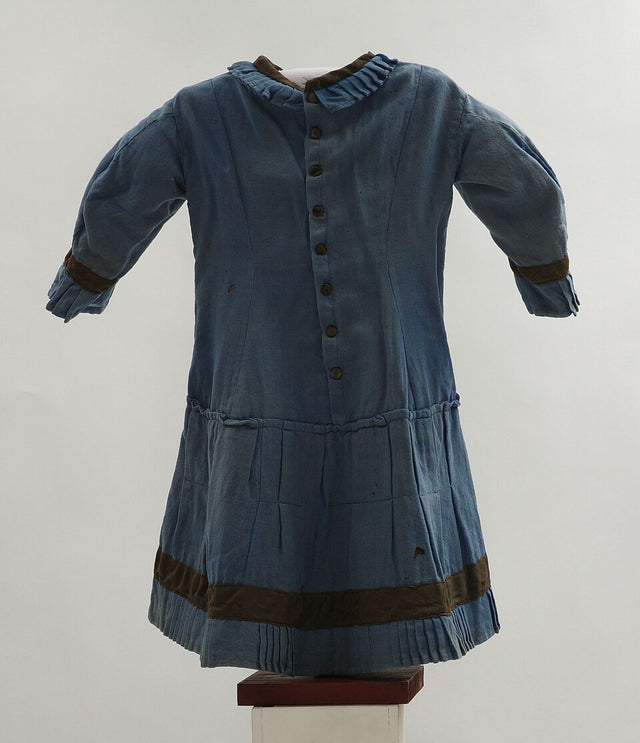
In the U.S., muslin is an inexpensive unbleached cotton plain weave used for test garments, also called toiles or muslins. Originally the word meant the very fine, sheer cotton of Bengal, like the 1850s dress shown here.
Fiber
Cotton
Weave
Plain
Weight
Very light to medium, 2–5 oz/yd² (70–170 gsm)
Best for
Test garments, quilt backs, crafts, linings, light curtains
Tip: For a test garment, pick a muslin close in weight to your final fabric, so the fit check is accurate.
Photo: Unknown author, public domain, via Wikimedia Commons
Oxford cloth
A cotton shirting woven in a basket weave, with pairs of fine warp yarns crossing a thicker weft. A colored warp and white weft give it a subtle texture, as in the classic button-down shirt.
Fiber
Cotton, poly-cotton
Weave
Basket (2x1)
Weight
Light to medium, 3.5–5 oz/yd² (120–170 gsm)
Best for
Button-down shirts, dresses, light jackets
Tip: Use a 70/10 or 80/12 needle and flat-felled seams for a classic shirt finish.
A woven cotton with raised cords or small patterns, such as waffles or bird's eyes, made on a dobby loom. Marcella is a fine piqué for formal shirt fronts; knit piqué, used for polo shirts, is a different fabric.
A tightly woven plain weave with fine crosswise ribs, because the warp yarns are finer and more numerous than the weft. It is smooth, crisp and durable.
Fiber
Cotton, poly-cotton, silk
Weave
Plain, fine rib
Weight
Light, 3–4.5 oz/yd² (100–150 gsm)
Best for
Shirts, blouses, dresses, pajamas, linings
Tip: Use a sharp 70/10 or 80/12 needle. Poplin presses beautifully, so press each seam as you go.
A thin cotton with puckered stripes, made by weaving some warp yarns slack and others tight. The puckers hold it away from the skin, so it feels cool in hot weather and rarely needs ironing.
A woven cotton with uncut loops on one or both sides that soak up water, used for towels and robes. French terry is a different, knitted fabric with loops on the back only.
Fiber
Cotton, bamboo, blends
Weave
Uncut warp loop pile
Weight
Medium to heavy; bath towels are often 400–700 gsm
Best for
Towels, bathrobes, beach cover-ups, baby bibs
Tip: Use a walking foot and a 90/14 needle, and serge the edges because loops can pull out.
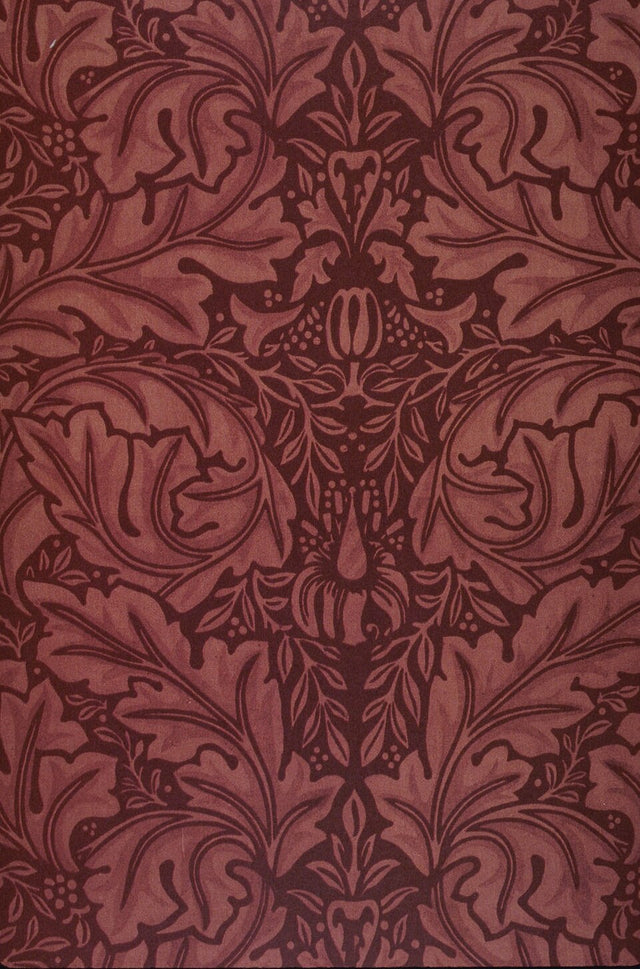
A weave in which each row shifts one step over, creating diagonal lines. Twills drape better and hide wear better than plain weaves of the same weight; denim, chino, drill and gabardine are all twills.
Fiber
Cotton, wool, polyester, blends
Weave
Twill, 2/1, 2/2 or 3/1
Weight
Light to heavy, 4–10 oz/yd² (140–340 gsm)
Best for
Pants, jackets, workwear, bags, upholstery
Tip: The lines run at an angle, so check that they slope the same way on every piece before you cut.
Photo: William Morris, public domain, via Wikimedia Commons
Illustration
Voile
A soft, semi-sheer plain weave made from highly twisted yarns, in cotton or polyester. It drapes more and feels softer than lawn, and it is a favorite for sheer curtains and summer blouses.
Fiber
Cotton, polyester, blends
Weave
Plain, open
Weight
Very light, 1.5–3 oz/yd² (50–100 gsm)
Best for
Blouses, summer dresses, sheer curtains, linings
Tip: Sew with a 60/8 or 70/10 needle, French seams and a narrow rolled hem.
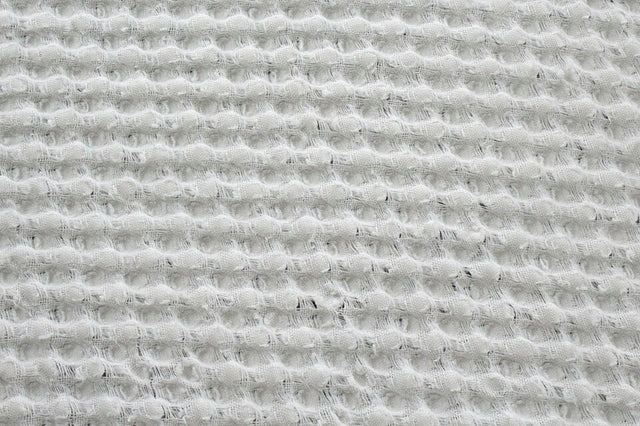
A woven fabric with raised square cells, like a waffle, that trap air and soak up water. It is also called honeycomb weave; waffle knit, used for thermal tops, is a different fabric.
Fiber
Cotton, linen, polyester
Weave
Honeycomb (dobby)
Weight
Medium, 5–10 oz/yd² (170–340 gsm)
Best for
Towels, robes, blankets, kitchen towels
Tip: Waffle weave shrinks a lot. Wash and dry it twice before cutting.
Warm, springy and easy to shape with steam, which is why tailors love wool. These are the classic cloths for coats, suits and jackets.
Boiled wool
Wool fabric, most often a knit, that is washed hot and agitated until the fibers felt and shrink into a dense, warm, wind-resistant cloth. We list it with melton and loden because it sews and wears like them.
Fiber
Wool
Weave
Fulled knit, sometimes woven
Weight
Medium to heavy, about 300–500 gsm
Best for
Jackets, coats, slippers, hats
Tip: The edges don't fray, so you can leave hems raw or bind them. Use a walking foot and a 90/14 needle.
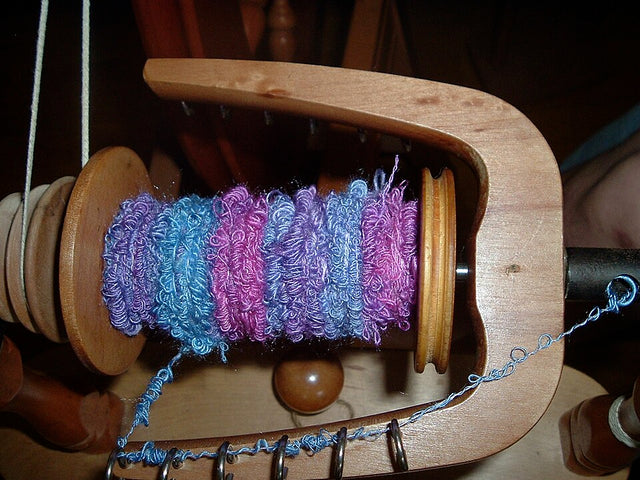
A fabric woven from bouclé yarn, which has small loops along its length, giving a nubby, textured surface. It is a classic choice for collarless jackets, coats and modern upholstery.
Fiber
Wool, mohair, cotton, polyester
Weave
Plain or twill with looped yarn
Weight
Medium to heavy, about 300–600 gsm
Best for
Jackets, coats, skirts, upholstery
Tip: Loops snag on presser feet, so use a walking foot and a 90/14 needle, and line the piece to keep it from stretching.
Photo: Loggie-log, public domain, via Wikimedia Commons
Gabardine
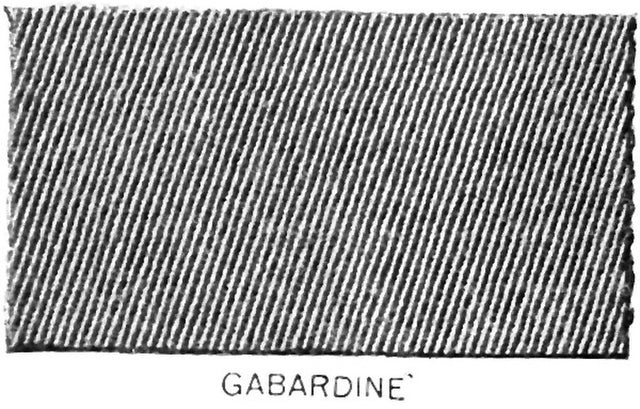
A tightly woven twill with steep, fine diagonal lines and a smooth, hard surface that sheds water. It was first made of worsted wool and is now also made in cotton and polyester.
Fiber
Wool, cotton, polyester
Weave
Steep twill
Weight
Medium, 6–9 oz/yd² (200–310 gsm)
Best for
Trench coats, suits, pants, skirts, uniforms
Tip: It shows needle holes and shine: test pressing on a scrap, use a press cloth, and avoid unpicking.
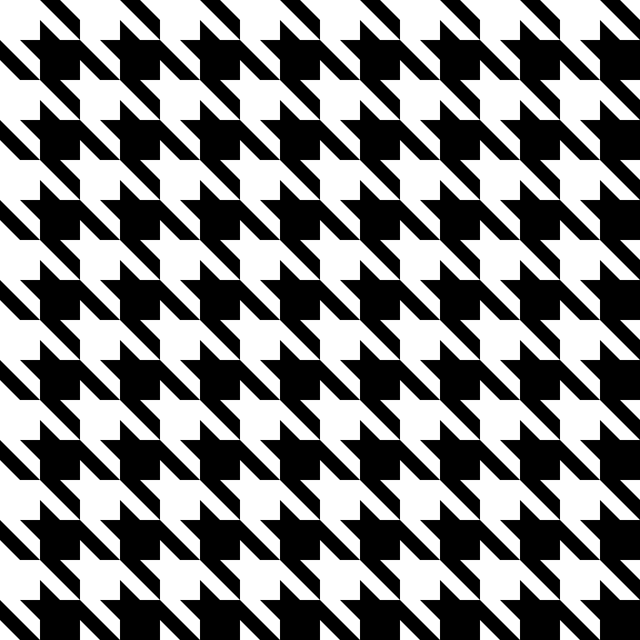
A broken check of jagged, four-pointed shapes, made with alternating groups of dark and light yarns in a twill weave. Small versions are called puppytooth.
Fiber
Wool, cotton, polyester
Weave
2/2 twill, color pattern
Weight
Medium to heavy, 6–14 oz/yd² (200–470 gsm)
Best for
Coats, jackets, skirts, trousers, scarves
Tip: Large houndstooth needs matching like plaid. Buy 10 to 20 percent more fabric.
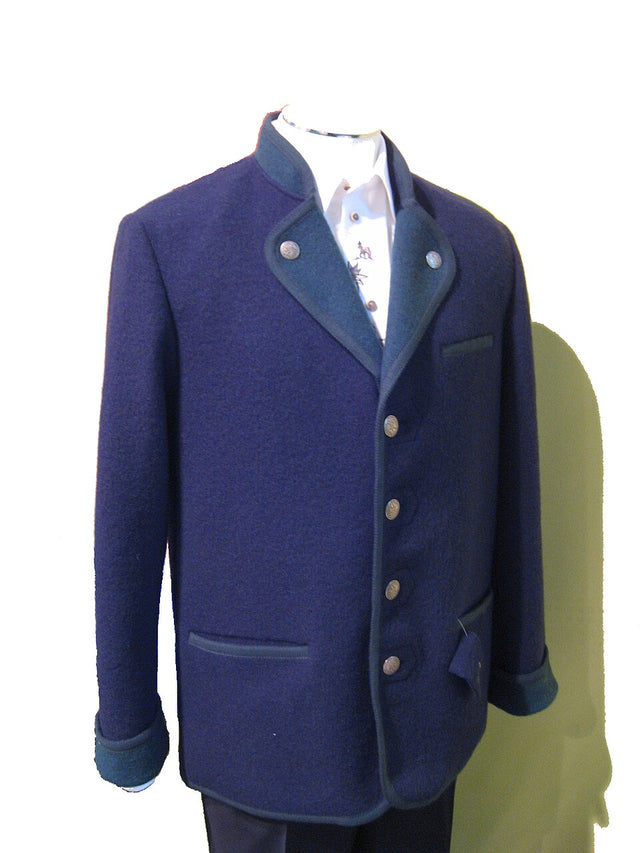
A dense, fulled wool from the Alpine regions of Austria and southern Germany, traditionally green. Fulling and brushing make it warm and water-resistant.
Fiber
Wool
Weave
Plain or twill, fulled and napped
Weight
Heavy, about 400–600 gsm
Best for
Coats, capes, hunting jackets, hats
Tip: Cut edges fray very little, so loden can be finished with raw or bound edges, like boiled wool.
Melton
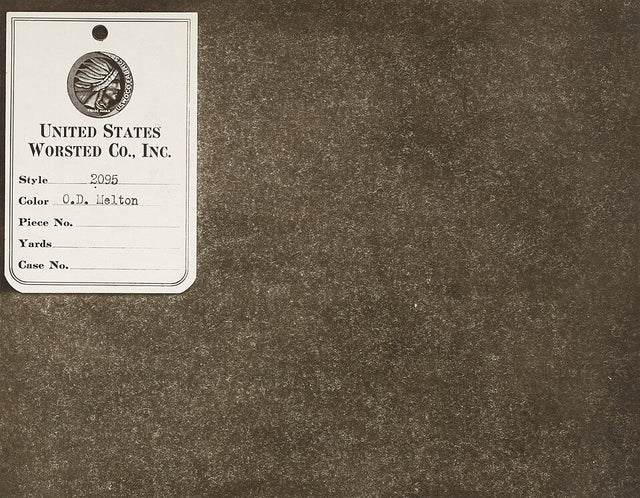
A heavy wool fulled so tightly that the weave disappears, leaving a smooth, felt-like surface. It blocks wind, does not fray, and is the classic cloth for pea coats.
Fiber
Wool, wool blends
Weave
Twill or plain, heavily fulled
Weight
Heavy, about 450–750 gsm
Best for
Pea coats, overcoats, varsity jackets, capes
Tip: Trim and grade the seam allowances to reduce bulk, use a 100/16 needle and press with a wooden clapper.
Photo: Unknown author, attribution required, via Wikimedia Commons
Tweed
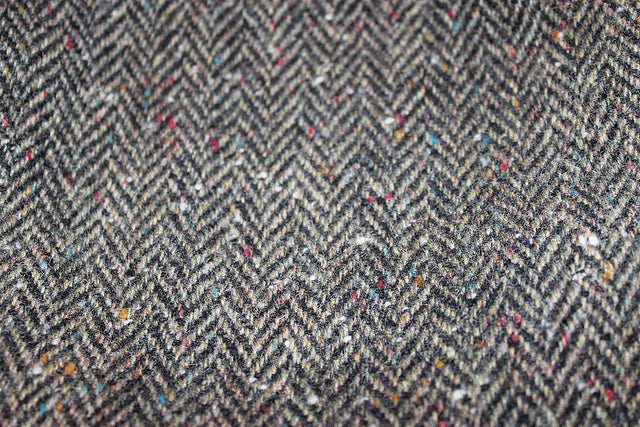
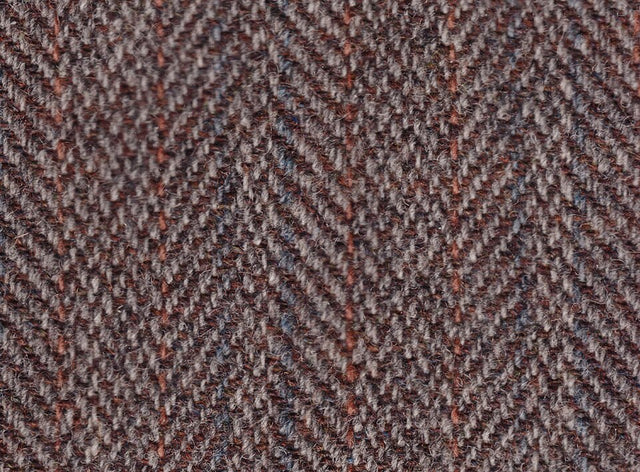
A rough, warm wool cloth from Scotland and Ireland, woven in plain, twill or herringbone patterns, often with flecks of color. Harris Tweed and Donegal tweed are famous types.
Fiber
Wool
Weave
Plain, twill or herringbone
Weight
Medium to heavy, 9–16 oz/yd² (310–540 gsm)
Best for
Jackets, coats, caps, skirts, bags
Tip: Tweed frays, so overlock the edges right after cutting, and use a walking foot.
Wool fabric woven from worsted yarn, spun from long fibers combed to lie parallel. It is smooth and strong and holds a sharp crease, which makes it the standard for tailored suits.
Fiber
Wool
Weave
Plain, twill or gabardine
Weight
Light to medium, 6–12 oz/yd² (200–410 gsm)
Best for
Suits, trousers, skirts, tailored dresses
Tip: Press with a press cloth to avoid shine, and sew with polyester or silk thread.
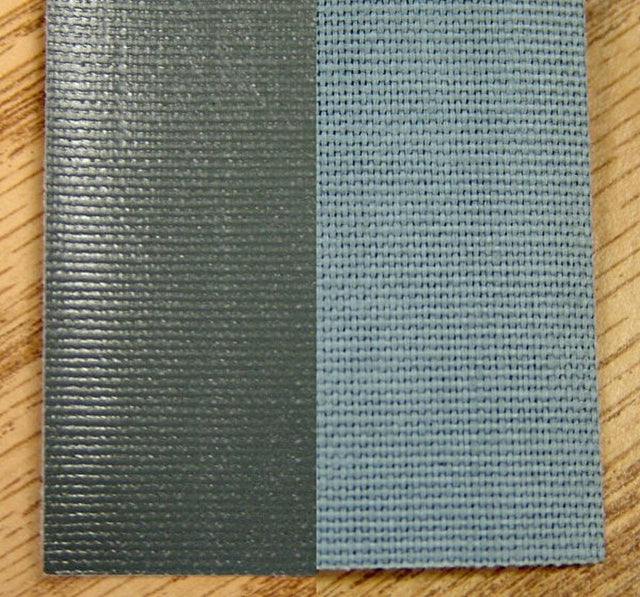
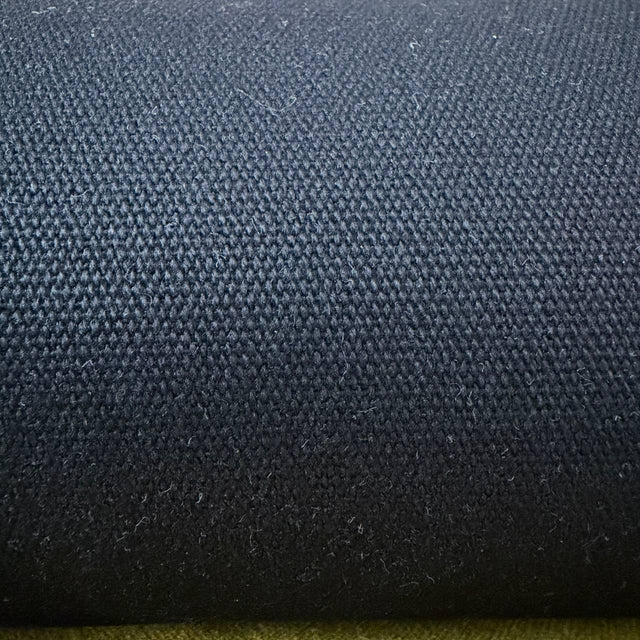
A heavy, durable plain-woven cotton with a dense, firm hand. It holds its shape and takes hard wear, so it is the go-to fabric for bags, workwear and home decor.
Fiber
Cotton, cotton-polyester
Weave
Tight plain weave
Weight
Medium to heavy, 7–24 oz/yd² (240–810 gsm)
Best for
Tote bags, aprons, upholstery, cushions, sneakers
Tip: Use a 100/16 or 110/18 jeans needle, a 3 mm stitch and polyester thread.
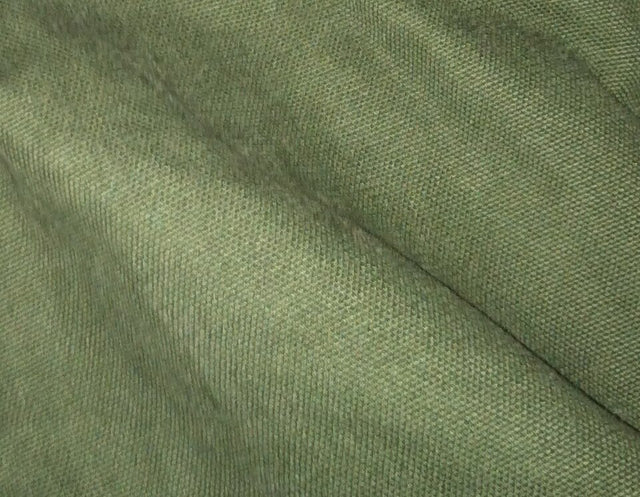
A tightly woven cotton canvas, smoother and denser than ordinary canvas. Numbered duck is graded from about 1 to 12, and the lower the number, the heavier the cloth.
Fiber
Cotton
Weave
Tight plain weave
Weight
Medium to heavy, 7–15 oz/yd² (240–510 gsm)
Best for
Work jackets, bags, tents, aprons, dog beds
Tip: Prewash duck to soften it and stop later shrinking, and sew with a 100/16 needle.
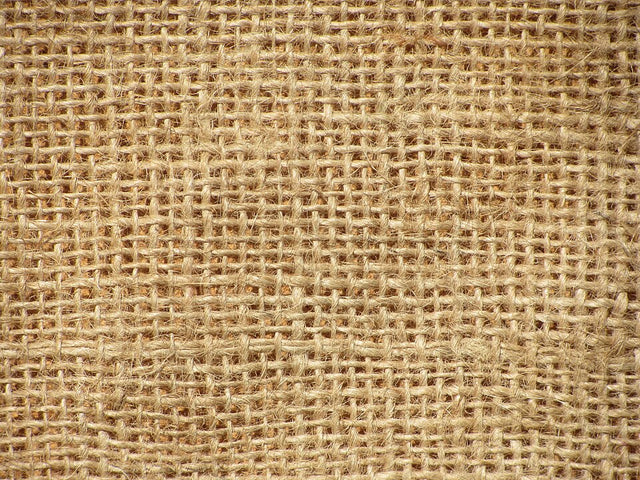
A coarse, plain-woven, unbleached cotton with natural flecks, named after Osnabrück in Germany. It is cheap and sturdy.
Fiber
Cotton
Weave
Coarse plain weave
Weight
Medium, 5–8 oz/yd² (170–270 gsm)
Best for
Upholstery underlayers, sacks, rustic decor, heavier test garments
Tip: Prewash it, because it shrinks and softens a lot.
Sailcloth
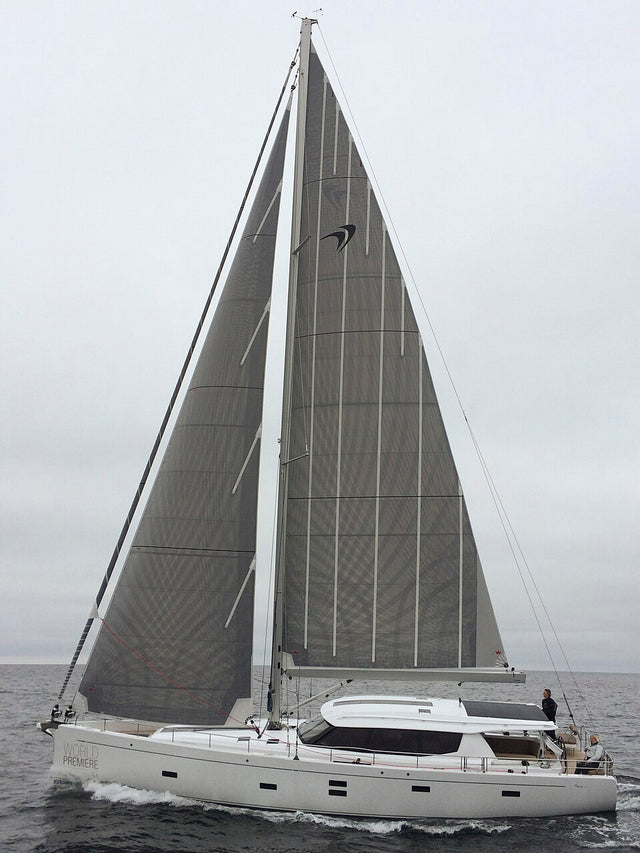
Originally a heavy cotton or linen canvas for ship sails; modern sails are made of polyester, nylon and laminates. As a garment fabric, sailcloth is a lighter cotton canvas for casual clothes.
Fiber
Cotton, linen, polyester, nylon
Weave
Tight plain weave
Weight
Medium to heavy
Best for
Casual pants, jackets, bags, outdoor gear
Tip: Use a jeans needle and polyester thread, which holds up outdoors.
A tightly woven cotton or linen, usually in twill or herringbone, with classic narrow stripes. It was made dense enough to keep feathers inside mattresses and pillows.
Tip: Use the stripes as cutting guides, and sew feather pillows with a short stitch so nothing escapes.
How to sew woven fabric
Prewash the way you will wash the finished piece. Cotton and linen often shrink 3 to 5 percent, flannel more. See how to prepare fabric before sewing.
Cut on grain: lay pattern pieces parallel to the selvage. See grain.
Match the needle to the weight: 60/8 to 70/10 for lawn and voile, 80/12 for shirting, 90/14 for twill, 100/16 for denim and canvas. Try our needle and stitch finder.
Finish raw edges, because wovens fray: serge, zigzag, pink, or use French or flat-felled seams.
Press as you go, with a press cloth on wool and dark fabrics.
What is the difference between woven and knit fabric?
Woven fabric is made by crossing two sets of yarns at right angles, so it is stable and stretches only on the bias. Knit fabric is made of interlocking loops, so it stretches and recovers. Woven edges fray when cut; most knit edges do not.
What are the three basic weaves?
Plain weave (poplin, muslin, canvas), twill (denim, chino, gabardine) and satin (satin, sateen). Basket, herringbone, pile and most other weaves are variations of these three.
Which woven fabric is best for beginners?
Medium-weight cotton such as quilting cotton, poplin, chambray or calico. It does not slip, presses well and is easy to unpick. Leave slippery satins and loose tweeds for later.
Do woven fabrics stretch?
Not along the grain. They give a little on the bias, at 45 degrees. Stretch wovens, such as stretch denim, contain a small amount of spandex.
What does oz mean in fabric weight?
Ounces per square yard. Under 4 oz is light, 4 to 8 oz is medium, and over 8 oz is heavy. Multiply by about 34 to get grams per square meter, or see GSM in the dictionary.
🧵 Which fabric should we stock next?
See a fabric here that we don't carry yet, or can't find the one you need? Tell us what it is. We read every answer and use it to choose the fabrics we add next.
Thank you! We read every fabric wish.
About the photos: photos credited to Wikimedia Commons are used under the licenses linked under each photo, and are resized and may be cropped to fit. Photos marked KAHANNE show fabric from our store. Cards marked Illustration show drawn swatches, not photos.