Home › Types of Fabric › Silk, Satin and Lace Fabrics Updated November 14, 2026 · KAHANNE Fabrics
Quick answer
Evening fabrics are chosen for sheen, drape and sparkle. Satin and charmeuse shine, chiffon and organza add sheer layers, velvet and brocade add richness, and lace and tulle add delicate texture. Many of them slip or fray, so they need a little more care to sew. Below are 24 types with photos and sewing tips.
On this page
Find a fabric fast Silk, satin and sheer fabrics Velvet, brocade and shine Lace and net Sheen, drape and body at a glance How to sew slippery and sheer fabrics FAQ Silk, satin and sheer fabrics
Lustrous, drapey and sheer fabrics for evening gowns, bridal, blouses and linings.
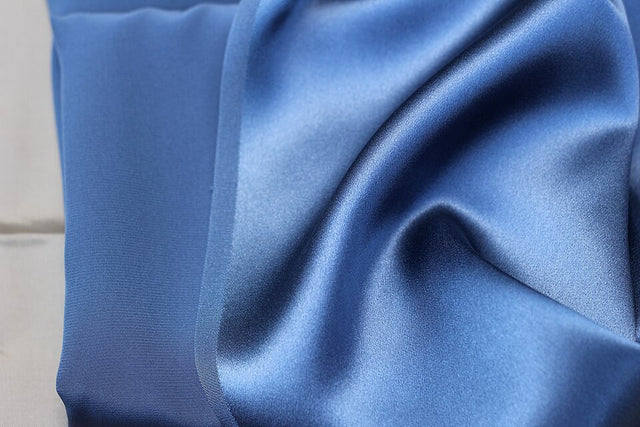
Charmeuse
A lightweight satin, traditionally silk, with a liquid drape: very shiny on the face and matte on the back. It clings and flows.
Fiber
Silk, polyester
Weave
Light satin weave
Weight
Light, about 60–100 gsm
Best for
Slip dresses, blouses, lingerie, scarves, bias-cut gowns
Tip: Cut between layers of tissue paper, use a 60/8 or 70/10 needle and finish with French seams.
Charmeuse in the dictionary
Photo: Enby , CC BY-SA 4.0 , via Wikimedia Commons
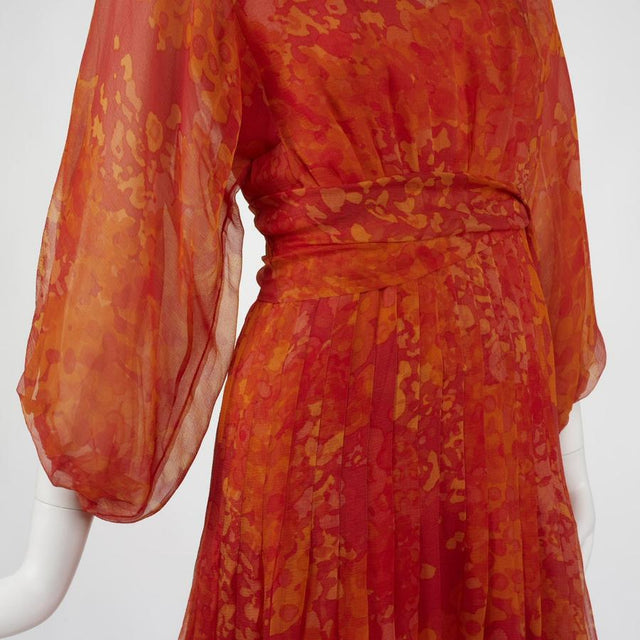
Chiffon
A sheer, very light, floaty fabric with a slightly rough feel, made from twisted yarns. It is often layered or used for overlays and sleeves.
Fiber
Silk, polyester, nylon
Weave
Open plain weave
Weight
Very light, about 25–60 gsm
Best for
Overlays, scarves, blouses, evening and bridal gowns, sleeves
Tip: Spray starch helps when cutting. Use a 60/8 needle, a short stitch and French or rolled seams.
Chiffon in the dictionary
Photo: RISD Museum , CC0 , via Wikimedia Commons
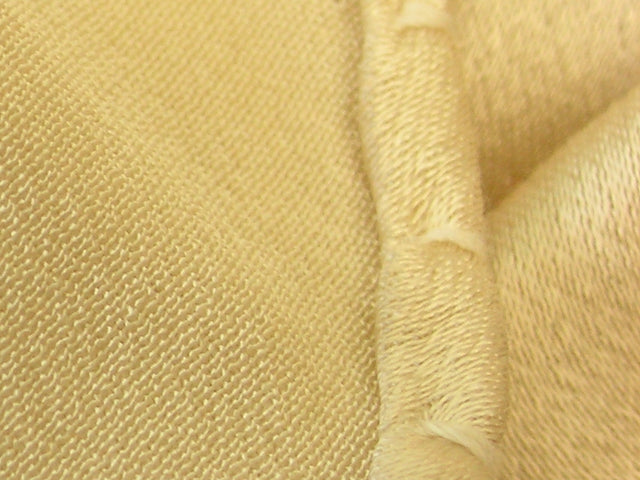
Crepe
A fabric with a fine, pebbly texture made from highly twisted yarns, with a soft drape. Crepe de chine is a light silk crepe; crepe-back satin has crepe on one side and satin on the other.
Fiber
Silk, polyester, wool, rayon
Weave
Plain weave with twisted crepe yarns
Weight
Light to medium
Best for
Dresses, blouses, evening wear, tailored pants
Tip: Crepe can shrink and stretch, so prewash or steam it first and stay-stitch curved edges.
Crepe in the dictionary
Photo: Unknown author , CC BY 4.0 , via Wikimedia Commons
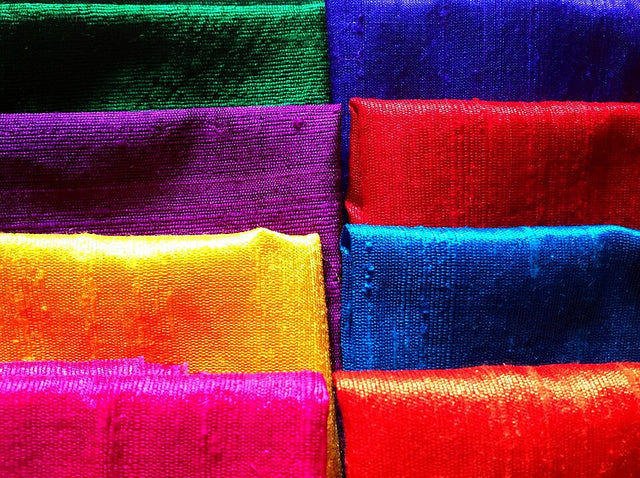
Dupioni silk
A crisp silk woven from uneven yarns of double cocoons, which give it irregular slubs and a lustrous, two-tone shimmer.
Fiber
Silk
Weave
Plain weave with slubbed weft
Weight
Medium and crisp
Best for
Evening dresses, jackets, bridal, home decor, ties
Tip: Dupioni frays a lot: serge the edges right after cutting and dry clean finished pieces.
Silk in the dictionary
Photo: Smriti tripathi , CC BY 3.0 , via Wikimedia Commons
Illustration
Georgette
A sheer crepe fabric, heavier and more opaque than chiffon, with a grainy, crinkly texture and a bouncy drape.
Fiber
Silk, polyester
Weave
Plain weave with crepe yarns
Weight
Light, about 50–90 gsm
Best for
Dresses, saris, blouses, skirts, scarves
Tip: Georgette frays easily, so finish seams with French seams or a rolled serger edge.
Georgette in the dictionary
Moiré
A fabric, usually silk or acetate taffeta, pressed between engraved rollers to create a rippling watermark pattern.
Fiber
Silk, acetate, polyester
Weave
Ribbed plain weave, calendered
Weight
Medium
Best for
Evening wear, ribbons, bridal, decor
Tip: Steam can erase the watermark, so press with a dry iron from the back and test on a scrap.
Photo: RISD Museum , CC0 , via Wikimedia Commons
Organdy
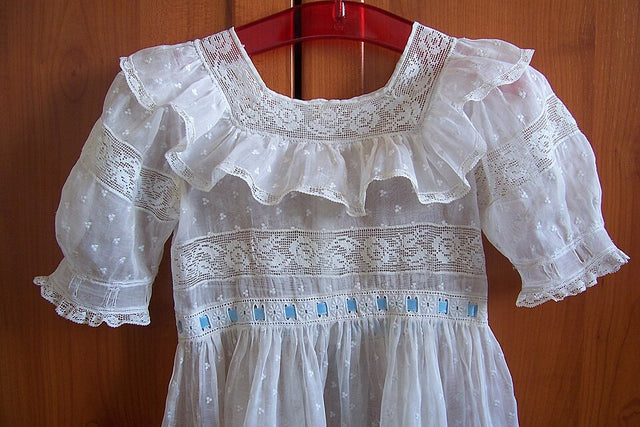
A sheer, crisp cotton, the cotton cousin of organza, stiffened with a permanent finish. It is used for summer dresses, collars and heirloom sewing.
Fiber
Cotton
Weave
Sheer plain weave
Weight
Very light and crisp
Best for
Children's dresses, collars, aprons, curtains
Tip: Organdy also works as a crisp sew-in interfacing for collars and cuffs on lightweight garments.
Photo: Lourdes Cardenal , CC BY-SA 3.0 , via Wikimedia Commons
Organza
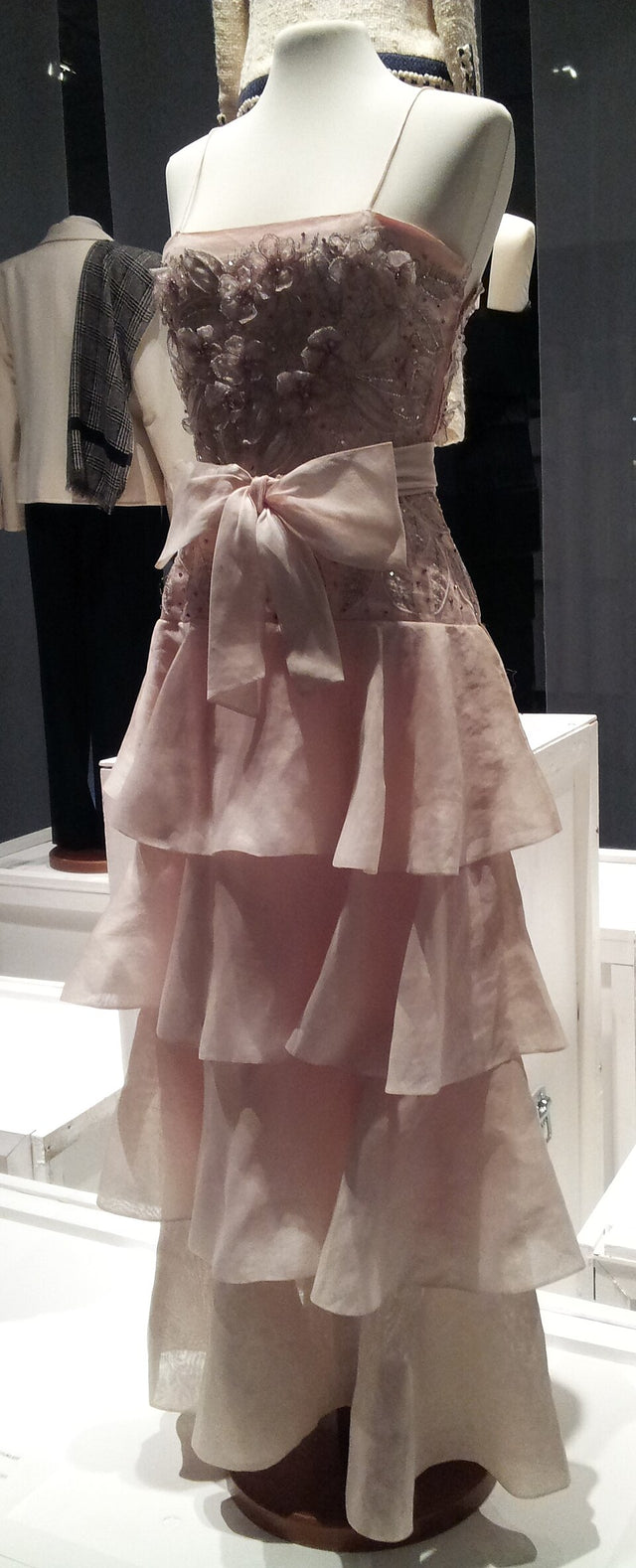
A sheer, crisp, lightweight fabric made from tightly twisted yarns. It holds its shape, so it adds volume to skirts and sleeves.
Fiber
Silk, polyester, nylon
Weave
Plain weave, tightly twisted yarns
Weight
Very light and crisp
Best for
Overskirts, sleeves, bridal, underlining, gift bags
Tip: Organza shows every stitch, so use French seams and a sharp needle. A scrap makes an excellent see-through press cloth.
Organza in the dictionary
Photo: Mabalu , CC BY-SA 4.0 , via Wikimedia Commons
Satin
Not a fiber but a weave: long floating yarns give one side a smooth, glossy face and the other a dull back. Satin can be silk, polyester, acetate or blends.
Fiber
Silk, polyester, acetate, rayon
Weave
Satin weave
Weight
Light to heavy
Best for
Evening gowns, bridal, linings, lingerie, pillowcases
Tip: Satin slips and shows pin marks: pin inside the seam allowance, cut one layer at a time and use a fine sharp needle.
Satin in the dictionary
Photo: Jwrusa and Kjoonlee , public domain, via Wikimedia Commons
Shantung
A silk with a slubbed texture, smoother and finer than dupioni, named after China's Shandong province.
Fiber
Silk, polyester
Weave
Plain weave with slubbed yarns
Weight
Light to medium
Best for
Dresses, suits, bridal, blouses
Tip: Line shantung garments, and finish seams neatly because the slubs can catch.
Shantung in the dictionary
Photo: Embroiderizer , CC BY 2.0 , via Wikimedia Commons
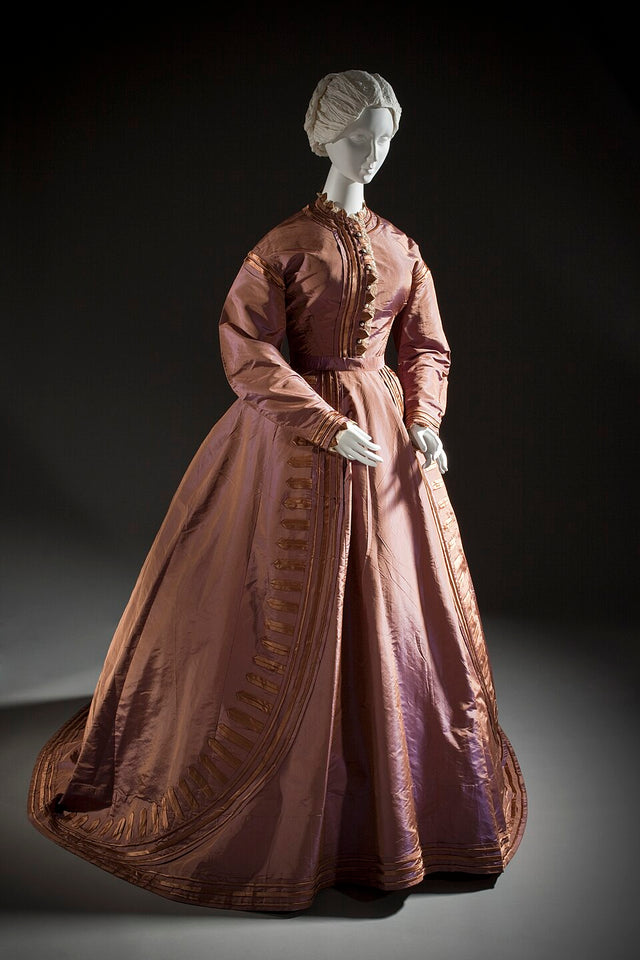
Taffeta
A crisp, smooth plain weave with a subtle sheen that rustles when it moves. It holds its shape for full skirts and ball gowns.
Fiber
Silk, polyester, acetate, nylon
Weave
Tight plain weave
Weight
Light to medium
Best for
Ball gowns, bridal, full skirts, linings, costumes
Tip: Needle holes stay visible, so check the fit on a test garment first and avoid unpicking.
Taffeta in the dictionary
Photo: Unknown author , public domain, via Wikimedia Commons
Velvet, brocade and shine
Rich pile, woven patterns and metallic sparkle for holiday, stage and evening wear.
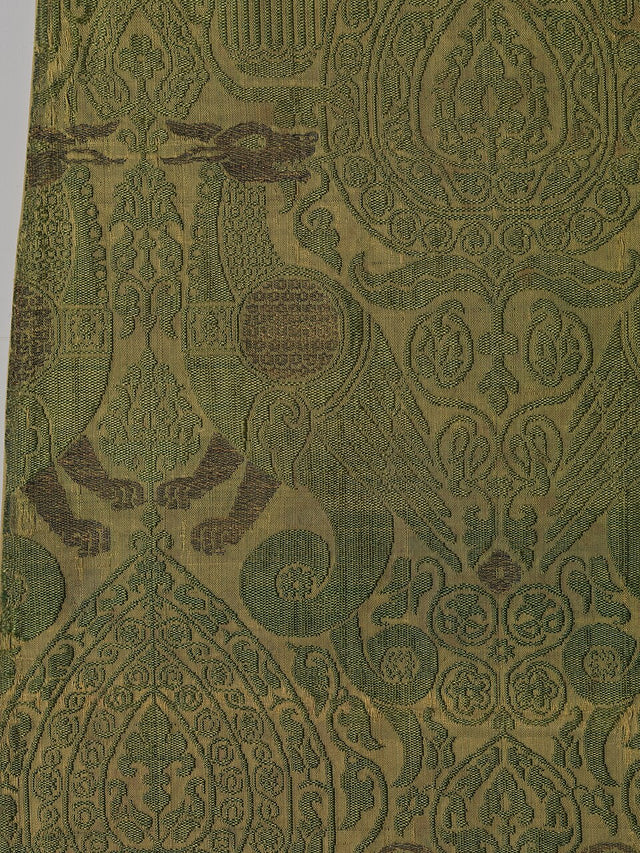
Brocade
A richly patterned fabric with raised designs woven in with extra weft threads, often metallic. It looks embroidered but is woven on a jacquard loom.
Fiber
Silk, rayon, polyester, metallic yarn
Weave
Jacquard with supplementary weft
Weight
Medium to heavy
Best for
Jackets, vests, evening wear, cushions, upholstery
Tip: Line brocade and finish edges well, because the floats snag and the weave frays.
Brocade in the dictionary · Banarasi brocade
Photo: The Metropolitan Museum of Art , CC0 , via Wikimedia Commons
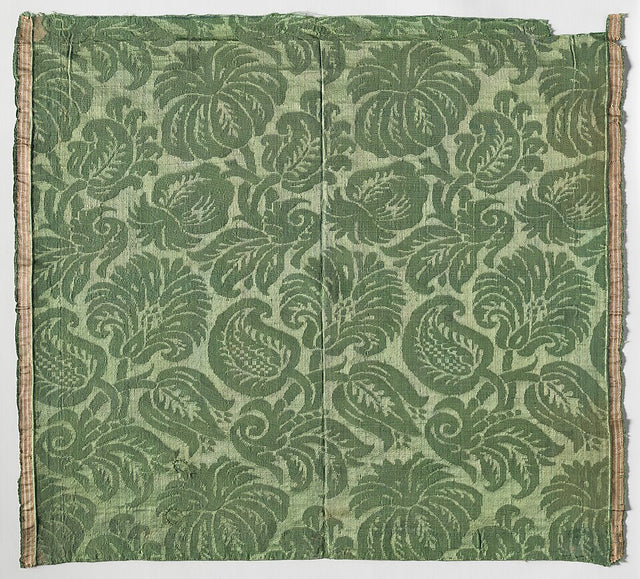
Damask
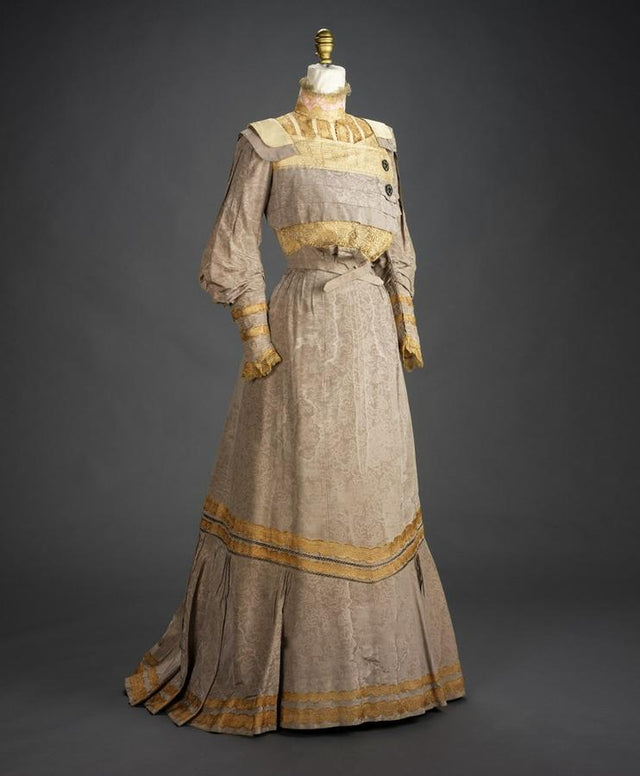
A reversible patterned fabric woven on a jacquard loom, with glossy satin-weave motifs on a matte ground. The pattern shows on both sides in reverse.
Fiber
Silk, linen, cotton, polyester
Weave
Jacquard, satin and sateen
Weight
Medium
Best for
Table linens, drapes, upholstery, evening wear
Tip: Center large motifs on cushions and panels, and buy extra for pattern matching.
Damask in the dictionary
Photo: The Metropolitan Museum of Art , CC0 , via Wikimedia Commons
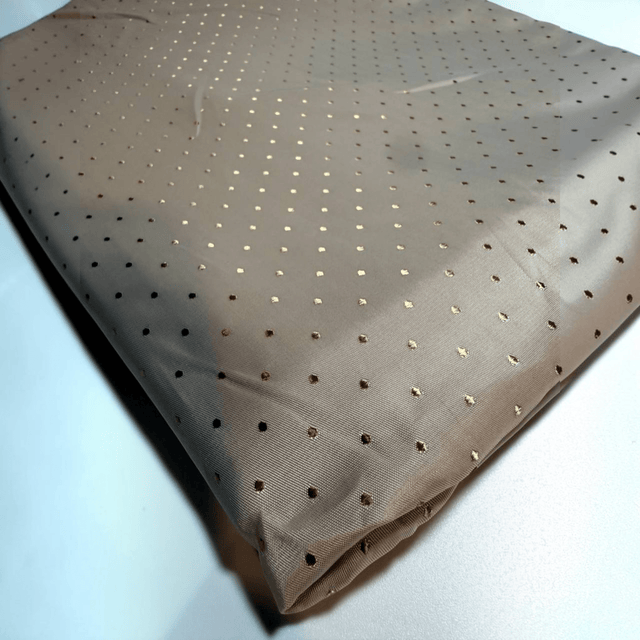
Jacquard
Any fabric with a pattern woven in on a jacquard loom, from fine dot linings to heavy upholstery. The pattern is part of the weave, not printed.
Fiber
Polyester, viscose, cotton, silk
Weave
Jacquard
Weight
Light to heavy
Best for
Linings, dresses, jackets, upholstery
Tip: Jacquard linings are slippery: cut one layer at a time and use a sharp 70/10 needle.
Jacquard in the dictionary
Shop our dot jacquard linings →
Photo: KAHANNE
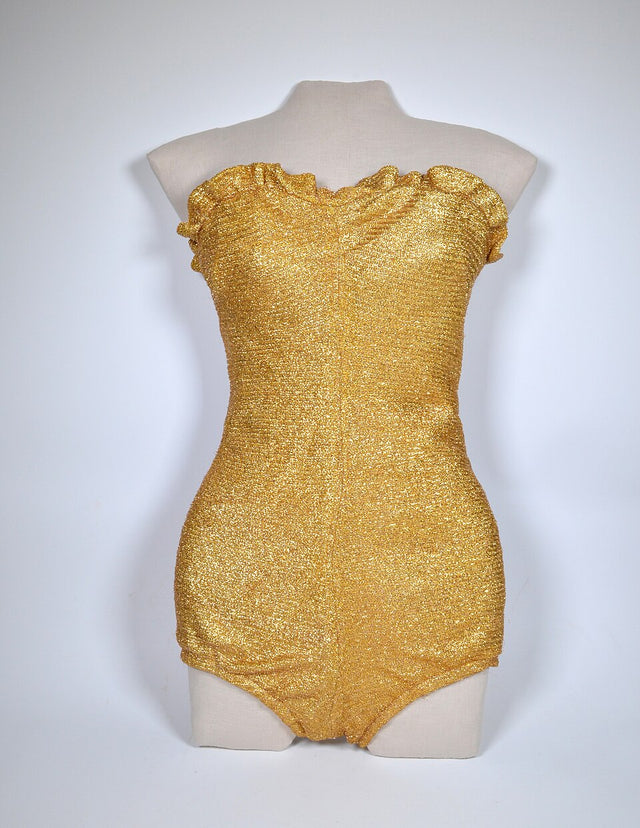
Lamé
A fabric woven or knitted with metallic yarns, usually gold or silver, for a bright, mirror-like shine.
Fiber
Metallic yarn with polyester, nylon or silk
Weave
Woven or knit
Weight
Light to medium
Best for
Evening gowns, stage costumes, holiday wear, accents
Tip: Lamé scratches and frays: line it, use a new sharp needle and press with a low iron through a cloth.
Lamé in the dictionary
Photo: Rachel Helps (BYU) , CC BY-SA 4.0 , via Wikimedia Commons
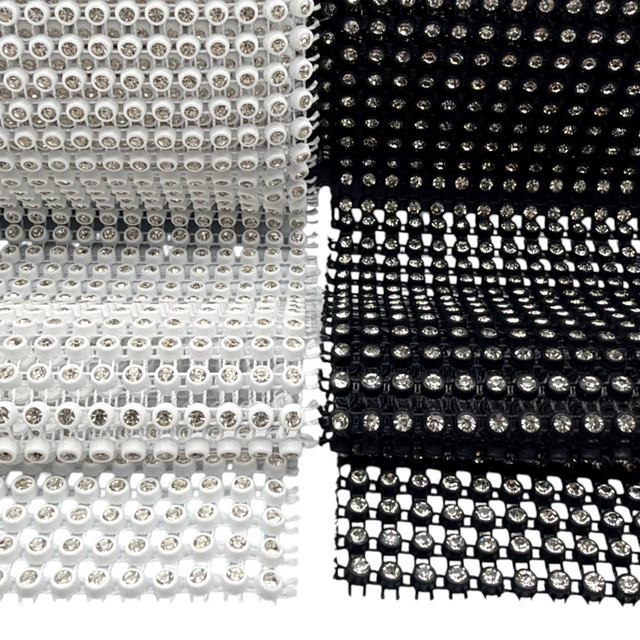
Rhinestone mesh
Rows of crystal rhinestones set in a flexible plastic mesh, sold by the yard or in sheets for instant sparkle.
Fiber
Plastic mesh with glass or resin stones
Weave
Mesh with set stones
Weight
Heavy
Best for
Costume trims, straps, belts, bags, bridal accents
Tip: Cut between the rows with sturdy scissors, and sew it on by hand through the mesh, not the stones.
Rhinestone mesh in the dictionary
Shop rhinestone mesh →
Photo: KAHANNE
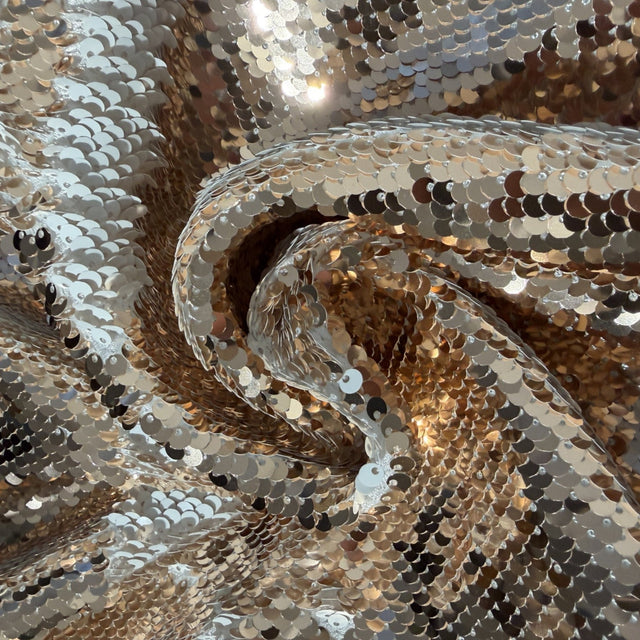
Sequin fabric
A mesh or knit base covered with sewn-on sequins. Reversible (flip) sequins change color when you brush them the other way.
Fiber
Polyester mesh base, plastic sequins
Weave
Sequins embroidered on mesh or knit
Weight
Medium to heavy
Best for
Dance costumes, evening wear, skirts, pillows, accents
Tip: Remove the sequins from seam allowances before sewing, and use a zipper foot and a heavy needle.
Sequin fabric in the dictionary
Shop reversible sequin fabric →
Photo: KAHANNE
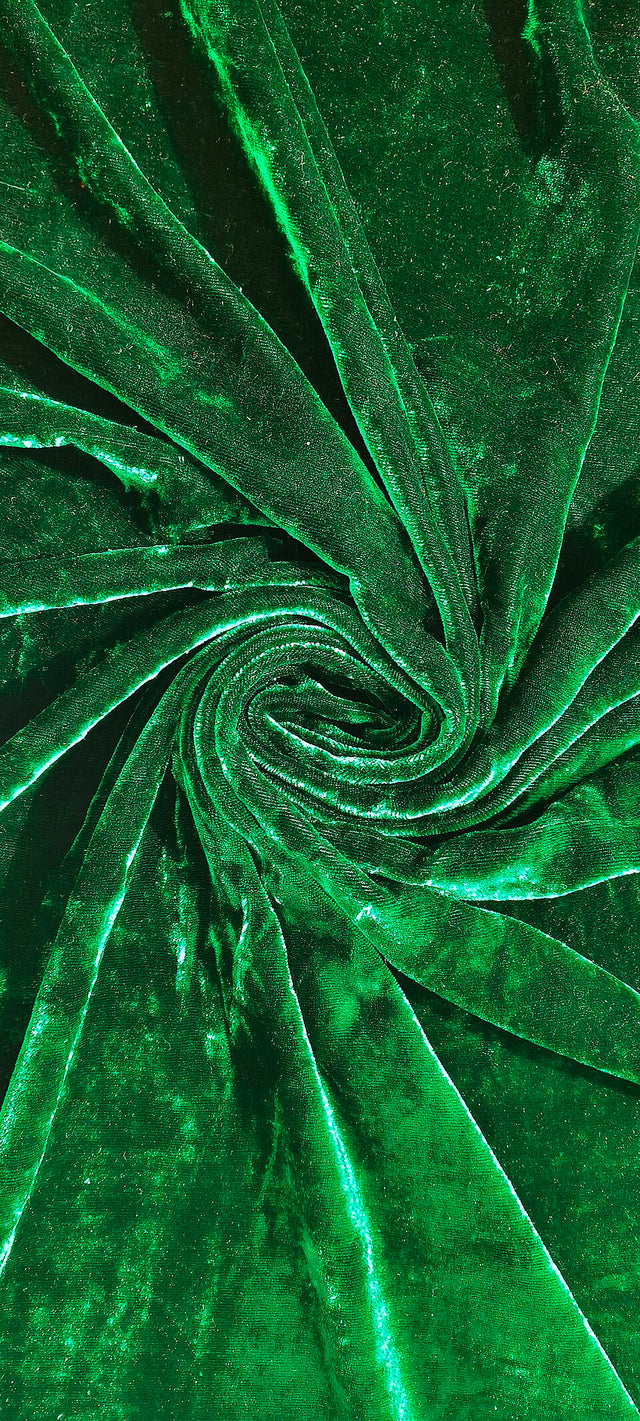
Velvet
A woven pile fabric with short, dense cut threads that give it a deep, soft sheen. The pile comes from an extra set of warp yarns; crushed and stretch velvet are variations.
Fiber
Silk, rayon, cotton, polyester
Weave
Warp pile
Weight
Medium to heavy
Best for
Evening wear, jackets, holiday dresses, upholstery, costumes
Tip: Cut every piece with the pile running the same way, use a walking foot and press on a thick towel from the back.
Velvet in the dictionary · Velveteen, its cotton cousin
Photo: Shiva Theerthagiri , CC BY 4.0 , via Wikimedia Commons
Lace and net
Lace, eyelet and tulle for bridal, lingerie, overlays and trims.
Alençon lace
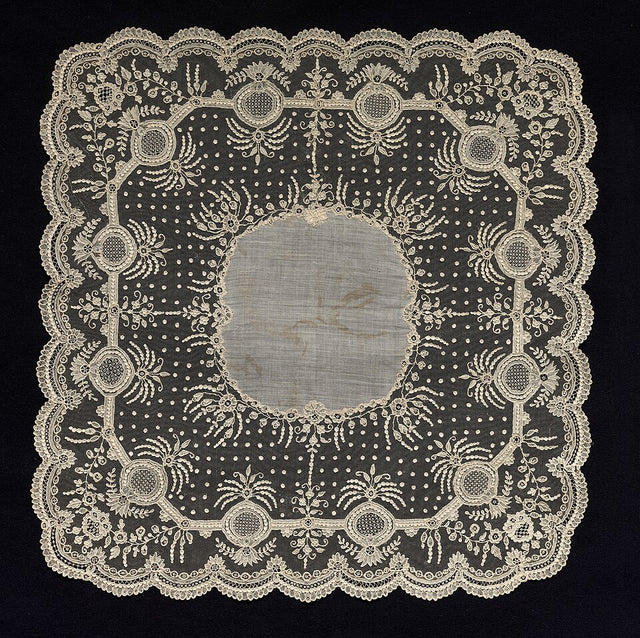
A needle lace from Alençon, France, with motifs outlined in a raised cord. It is often called the queen of lace.
Fiber
Linen, silk, cotton, nylon
Weave
Needle lace with corded motifs
Weight
Light
Best for
Bridal gowns, veils, appliqués, trims
Tip: Cut out single motifs and appliqué them by hand onto tulle or the gown.
Lace in the dictionary
Photo: Cleveland Museum of Art , CC0 , via Wikimedia Commons
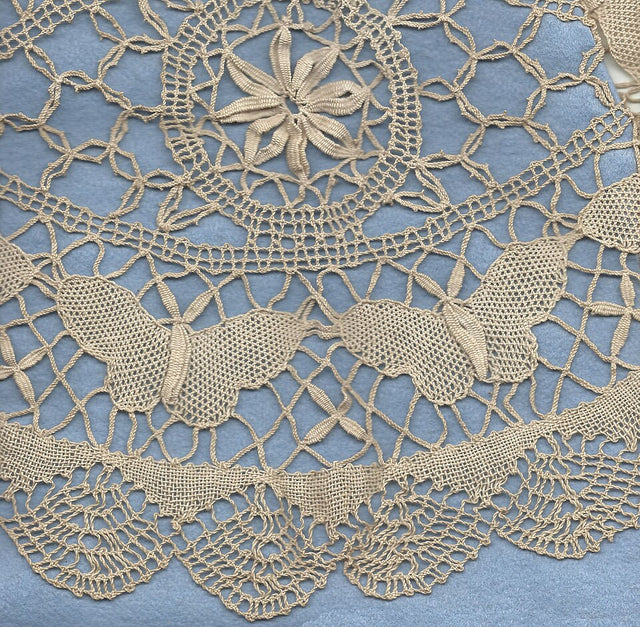
Chantilly lace
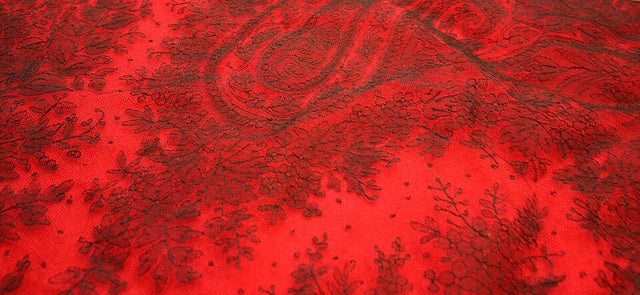
A fine bobbin lace with delicate floral patterns outlined in silky cord on a sheer net ground, named after Chantilly in France.
Fiber
Silk, cotton, nylon
Weave
Bobbin lace on a net ground
Weight
Very light
Best for
Bridal gowns, veils, overlays, lingerie
Tip: Cut around motifs instead of in straight lines, and join pieces by overlapping motifs and stitching by hand.
Lace in the dictionary
Photo: Unknown maker, via DPLA , public domain, via Wikimedia Commons
Cluny lace
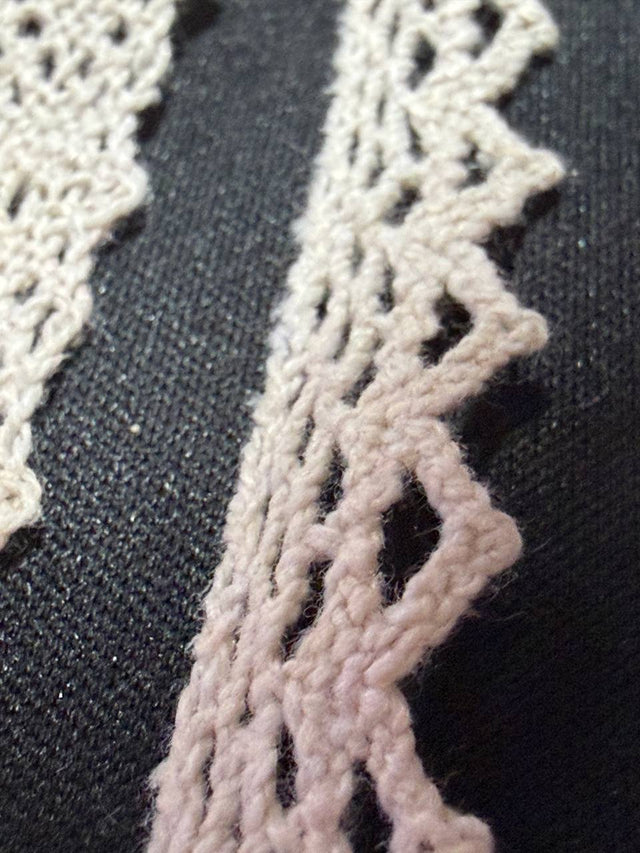
A sturdy bobbin lace, usually cotton or linen, with geometric patterns, wheels and petals.
Fiber
Cotton, linen
Weave
Bobbin lace
Weight
Medium
Best for
Trims, hems, curtains, tablecloths, heirloom sewing
Tip: Prewash cotton Cluny lace before sewing it to cotton fabric, so both shrink together.
Cluny lace in the dictionary
Shop cotton Cluny lace trim →
Photo: KAHANNE
Eyelet (broderie anglaise)
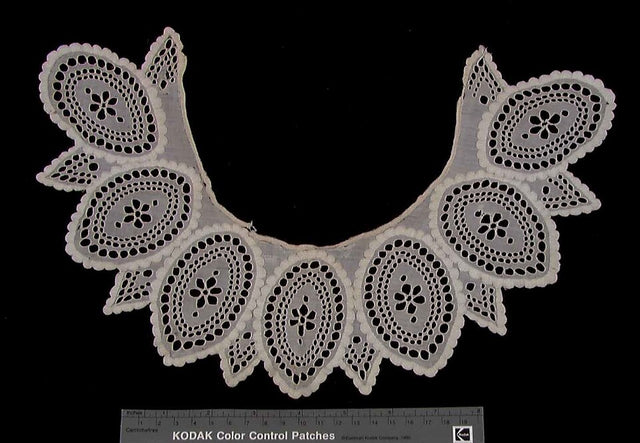
Cotton with small cut holes edged in satin-stitch embroidery, forming flowers and scallops. It is fresh, summery and slightly see-through.
Fiber
Cotton, cotton-polyester
Weave
Plain weave, embroidered and cut
Weight
Light
Best for
Summer dresses, blouses, children's wear, trims, nightwear
Tip: Line or underline eyelet, and place scalloped borders along hems so there is no hem to sew.
Eyelet (broderie anglaise) in the dictionary
Photo: Anne-Lise Reinsfelt / Norwegian Museum of Cultural History , CC BY-SA 4.0 , via Wikimedia Commons
Guipure lace
A heavier lace with bold motifs joined by bars or plaits instead of a net ground, so the design stands out strongly.
Fiber
Cotton, polyester, rayon
Weave
Bobbin or chemical lace
Weight
Medium
Best for
Dresses, tops, bridal, collars, trims
Tip: Guipure doesn't fray, so you can trim around motifs and lap the seams almost invisibly.
Lace in the dictionary
Photo: Joedkins , CC BY-SA 4.0 , via Wikimedia Commons
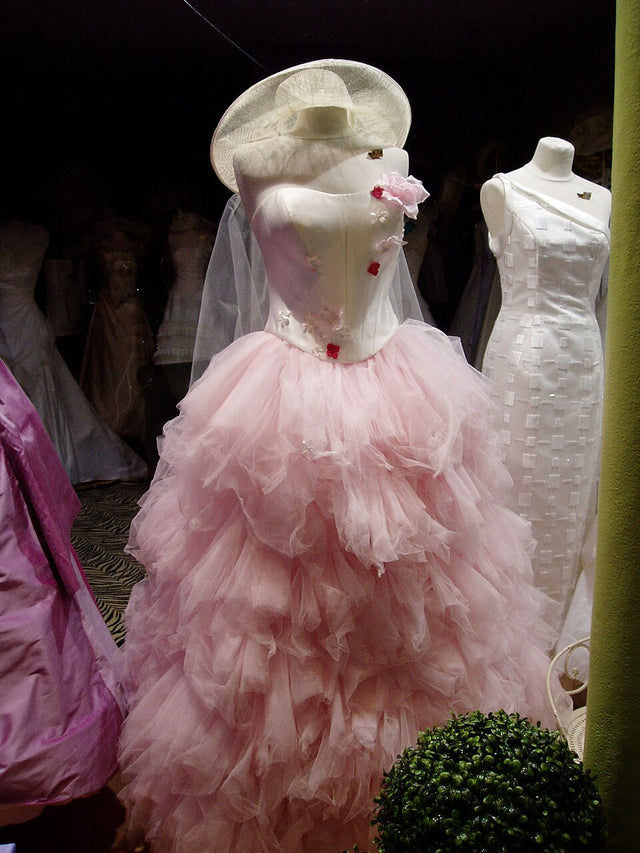
Tulle
A lightweight, fine net with small hexagonal holes, made of nylon, polyester or silk. It is soft or stiff depending on the finish and is the classic fabric for veils and tutus.
Fiber
Nylon, polyester, silk
Weave
Net (bobbinet or warp knit)
Weight
Very light
Best for
Tutus, petticoats, veils, overskirts, decor
Tip: Tulle doesn't fray. Gather it with a long stitch or over fishing line, and cut many layers at once with a rotary cutter.
Tulle in the dictionary
Photo: libertygrace0 , CC BY 2.0 , via Wikimedia Commons
Sheen, drape and body at a glance
Pick by the look and movement you want.
How to sew slippery and sheer fabrics
Cut one layer at a time, on tissue paper or with a rotary cutter and weights, so the fabric can't shift.
Needle and stitch: a new fine needle (60/8 to 70/10) and a short stitch; hold thread tails when you start.
Seams: French seams or narrow rolled hems on sheers; a lining hides seams on lace and sequins.
Press with low heat and a press cloth, and test on a scrap first, especially on synthetics and metallics.
Plan sparkle: remove sequins and stones from seam allowances before sewing. Our Design Studio lets you try rhinestones and trims first.
See also types of knit and stretch fabric , our dance costume fabric guide and the full types of fabric A to Z .
FAQ
What is the difference between satin and silk?
Silk is a fiber; satin is a weave. Satin can be made of silk, but most satin today is polyester. Silk satin breathes and costs more; polyester satin is durable and easy to care for.
What is the difference between chiffon and organza?
Both are sheer. Chiffon is soft and floaty and falls close to the body; organza is crisp and holds its shape, so it adds volume.
What is the difference between velvet and velveteen?
Velvet has a longer pile made from extra warp yarns and more sheen, usually in silk, rayon or polyester. Velveteen is cotton with a short weft pile and less shine.
What fabric is best for a wedding dress?
Satin, crepe and taffeta are popular for the main dress, with organza, chiffon, tulle and lace for layers, sleeves and veils.
How do I sew sequin fabric?
Remove the sequins from the seam allowances, sew with a zipper foot and a sturdy needle, and line the garment or bind the edges so the sequins do not scratch.
🧵 Which fabric should we stock next?
See a fabric here that we don't carry yet, or can't find the one you need? Tell us what it is. We read every answer and use it to choose the fabrics we add next.
Thank you! We read every fabric wish.
About the photos: photos credited to Wikimedia Commons are used under the licenses linked under each photo, and are resized and may be cropped to fit. Photos marked KAHANNE show fabric from our store. Cards marked Illustration show drawn swatches, not photos.